How to Make Telehealth Safer for a More Convenient Life Online

Among the many major shifts in lifestyle during the COVID-19 pandemic, the way we used healthcare was one of the most significant. Providers limited in-person visits, elective procedures were delayed, and we avoided hospitals. In response, we went online and started using telehealth and other virtual solutions in ways we never had before. 

Our latest consumer mindset survey confirms this was more than a passing trend, showing an almost 50% rise since the beginning of the pandemic in the use of PCs and Mobile devices to access health information, meet virtually with health care providers, and manage prescriptions. Survey respondents also showed they adapted by increasing their usage of smart fitness devices, like Fitbits, to track their personal health. 

The hidden cost of convenience  

Navigating the healthcare system and accessing more of our services through the web means more of our personal information is now online. From patient intake forms to test results, a great deal of data about our health, including confidential information like vaccination records, is potentially available. Survey respondents confirmed that they shared and accessed their personal health information across the internet, despite 1/3 or more of respondents having concerns for their privacy and security of their personal information. 

This trend hasn’t gone unnoticed by cybercriminals. In fact, the US Department of Health and Human Services is currently investigating nearly 800 health-related data breaches impacting nearly 60 million individuals. All of which is to say that telehealth advances may help us avoid sitting in a doctor’s office, but we need to be more mindful about our security when using these new online services. 

Maintaining your online wellness  

Despite the adoption of many telehealth and online health services, security was still a concern for many of our survey respondents. A majority said the primary reason they do not use smart devices for their personal health was because of privacy and security concerns. Fortunately, just as there is preventive medicine, there are also preventive cybersecurity measures we can take to keep our personal data safer online. Here are a few we recommend: 

  • Use a VPN when conducting a Telehealth video call with a physician, accessing your medical records, or managing your prescriptions 
  • A VPN is a Virtual Private Network, a service that protects your data and privacy online. It creates an encrypted tunnel to keep you anonymous by masking your IP address. This means you can keep prying eyes away from your confidential conversations. 
  • Use a proven security solution such as McAfee Total Protection on all devices 
  • All-in-one protection is a great way to keep your devices, identity, and privacy safer as you go about life online. 
  • Only use HTTPS connections when accessing an  telehealth website.  
  • Look at the web address in your browser to confirm it starts with HTTPS. These connections add security to your data transfers and help prevent data scraping. 
  • Use two-factor authentication when authenticating into important accounts. 
  • In addition to your password/username combo, you’re asked to verify who you are with something that you – and only you — own, such as a mobile phone. Put simply: it uses two factors to confirm it’s you. 
  • Practice safe password hygiene, don’t use the same passwords across your accounts and especially not for accessing your health information 
  • A password manager is a great way to organize and generate keys for your login.  

The shift to managing our health online comes with a few safety considerations, but by following the steps above, we can enjoy convenience and access to a healthier life online and off. 

Stay Updated  

To stay updated on all things McAfee and on top of the latest consumer and mobile security threats, follow @McAfee_Home on Twitter, subscribe to ournewsletter, listen to our podcast Hackable?, and ‘Like’ us on Facebook.   

The post How to Make Telehealth Safer for a More Convenient Life Online appeared first on McAfee Blogs.

Premium Domain Names – transcom.uk
Transcom ISP – The UK’s Best Business ISP
DoubleCheck any website at doublecheck.uk

Time to Batten the Cyber-Hatches

We all like to think we’d know what to do if an emergency should occur. In split seconds, we try to recall the ratio of chest compressions to breaths of air learned in bygone health classes or that summer spent lifeguarding. We recognize the importance of a “to go” bag those final few days of pregnant pauses and false alarms before a baby arrives. We have seen enough television shows and cooking competitions to know Gordon Ramsey or Guy Fieri will be the first to scold us if we try to put out an erupted kitchen grease fire with anything other than salt and smothering.  

We pick up a fair amount of knowledge and traits along the way to employ should disaster strike – and we absolutely take necessary precautions if we are knowingly in harm’s way. For example, those that live within a fault line’s reach are apt to prefer housing with stronger foundations and reinforced windowpanes. If you choose to live close to the warm waters of the Atlantic Ocean’s “hurricane alley,” you most likely know the fastest route to a causeway. An underground storm shelter to escape a tornado’s wily path can certainly come in handy.  

We are taught that “hindsight is 20/20,” and that harboring regret is top on the list of feelings to avoid most throughout life. We obey the mantra many scouts learn in youth – being prepared – to the best of our ability. While earth’s natural disasters may never be preventable, it is clear preparation and readiness to face the inevitable can be a key differentiator when it comes to damage that can be incurred.  

So far in 2021, we have witnessed major infrastructure impairments, interrupted supply chains, and havoc wreaked on local and federal economies.  

This did not happen due to volcanic eruptions, tsunamis, nor mudslides, but rather through security breaches and attacks. And despite headlines shouting and nearly every security vendor urging enterprises the world over that cyberattacks are posed to continue to increase both in frequency and sophistication, especially ransomware threats, organizations have more often than not found themselves on the receiving end of hindsight and regret when it comes to these man-made, modern-day disasters.  

So, the question begs to be asked, if the damages mentioned above could have been lessened or avoided through preparation and readiness, why is it still so difficult for CISOs to convince the c-suite that it’s better to be prepared for cyber-disaster, than sorry? 

Coulda, Woulda, Shoulda 

Staying safe and secure is the main goal in any disaster or emergency, but another less-talked-about goal is obviously to avoid what could have been prevented. The phrase, “I told you so,” will never land softly or kindly, especially when you are left surveying the ravaged ruins of what is left in the aftermath.  

Many CISOs and SOC workers have encountered this situation recently, mentally kicking themselves or expressing frustration analyzing and evaluating breaches or attacks after they have occurred. Of course, the vulnerabilities are crystal clear when security experts look back on what happened, but muddy and missed when they play out in real time.  

Scientists will inform us when a volcanic eruption may be imminent; a tornado will be prefaced with a loud siren meant to be heard throughout the county or immediate area; we often see tropical storms gain momentum and destructive qualities far before they transition to hurricanes and make landfall. This is to say, when it comes to natural disasters, they’re going to happen regardless, but damage prevention is dependent on prediction and experience.  

Carefully measured and monitored gaseous pressure under the earth’s surface will indicate when a volcano may be imminent. Because of this, volcanologists can attempt to forewarn residents to vacate an area before disaster hits. This outcome is expected, and systems and processes are in place to thwart damage as much as possible. I imagine along with scientists; we’d be quite surprised if a volcano suddenly started spewing mass quantities of water instead of magma and ash. 

We rely on patterns from previous incidents when it comes to geological acts of nature, but in the cybersecurity industry, disasters are man-made, and progressively more dangerous – created with motive, intent, and intelligence. 

With cybercriminals, attacks have been unpredictable and indiscriminate. They are infiltrating via multiple attack vectors; sitting unknowingly across networks and systems, leeching data from an organization; and altering entire courses of business as resources are used to bring systems back online, determine causes, and quickly implement solutions. In short, cybercriminals are serving up water when we expect magma nearly every single time and enterprises are struggling to keep up.   

XDR Is a Must for Readiness Kits 

The rulebook of what can be planned for and prevented has narrowed. Enterprises need to adopt an updated mindset, knowing that like a natural disaster, damage prevention from a cyber-disaster is dependent on prediction and experience.  

We are going to continue to get water when we expect magma, flames when we’re on the lookout for floods, and harsh winds when we anticipate rumbles. Powered by human intelligence, cybercriminals will continue to evolve threats, it will just be a matter of who can stay one step ahead – the good guys or the bad guys. The only constant isn’t a matter of if an attack will happen, but when.  

A movement toward proactivity instead of reactivity when addressing a breach or attack after it occurs is crucial against today’s cybercriminals. Organizations must recognize that no industry is immune to cybercriminals and get a better handle on SOC functions and processes, and control over where data travels and lies.  

This can mean a massive overhaul of a security stack to streamline solutions and expose manual or siloed processes that can lead to hidden vulnerabilities, evaluating security staff and talent to create better efficiencies, or embracing AI-guided tactics to automate activities and provide quick, actionable next steps should a breach occur.  

Early adopters of extended detection and response (XDR) technology are already seeing the benefits this proactivity can hold. The simple, unified visualization XDR provides is a strong vantage point for enterprises seeking greater situational awareness, enhanced insights, and faster time to remediate threats across all vectors from endpoint, network, and the cloud.  

Today, the warning siren that disaster is forthcoming has been sounding for a while. Enterprises need to take heed of the alarm to thwart as much damage as possible, as like natural disasters, a cyber-disaster can lead to massive destruction and upheaval.  

Want to learn more about McAfee’s XDR technology? Check out McAfee MVISION XDR 

The post Time to Batten the Cyber-Hatches appeared first on McAfee Blogs.

Premium Domain Names – transcom.uk
Transcom ISP – The UK’s Best Business ISP
DoubleCheck any website at doublecheck.uk
The Future of Mobile in a Post-COVID World & How to Stay Secure

The COVID-19 pandemic forced many of us to quickly adjust to the new normal — case and point,  admitted that they switched to digital activities like online banking, social networking, and online shopping in 2020 out of convenience. Research now shows that consumers’ reliance on this technology is here to stay. PwC found that 44% of global consumers now shop more using their smartphones compared to when COVID-19 began. While having the world at your fingertips is convenient, how does this digital lifestyle change expose users to cyber threats, especially attacks on mobile devices?  

It’s no secret that cybercriminals tend to manipulate their attacks based on the current trends set by technology users. As you reflect on how increased connectivity affected your everyday life, it’s important to ask yourself what could be lurking in the shadows while using your mobile devices. With more of us relying on our devices there’s plenty of opportunities for hackers. This begs the question, what does mobile security look like in a post-pandemic world?  

Mobile Security Challenges in the New Normal  

In addition to the increased adoption of digital devices, we had to figure out how to live our best lives online – from working from home to distance learning to digitally connecting with loved ones.  And according to McAfee’s 2021 Consumer Security Mindset Report, these online activities will remain a key part of consumers’ post-pandemic routines. But more time spent online interacting with various apps and services simultaneously increases your chance of exposure to cybersecurity risks and threats. Unsurprisingly, cybercriminals were quick to take advantage of this increase in connectivity. McAfee Labs saw an average of 375 new threats per minute and a surge of cybercriminals exploiting the pandemic through COVID-19 themed phishing campaigns, malicious apps, malware, and more. New mobile malware also increased by 71%, with total malware growing nearly 12% from July 2019 to July 2020. As consumers continue to rely on their mobile devices to complete various tasks, they will also need to adapt their security habits to accommodate for more time spent online.  

The Future of Mobile Security: Tips for Staying Secure 

Here at McAfee, we recognize that the way you and your family live your digital lives has changed. We want to help empower you to protect your online security in your hyper-connected lifestyle. To help provide greater peace of mind while using your mobile devices, follow these tips to help safeguard your security.  

1. Protect your mobile devices with a password, PIN, or facial recognition.  

When setting up a new device or online account, always change the default credentials to a password or passphrase that is strong and unique. Using different passwords or passphrases for each of your online accounts helps protect the majority of your data if one of your accounts becomes vulnerable. If you are worried about forgetting your passwords, subscribe to a password management tool that will remember them for you.  

Remember to physically lock your mobile devices with a security code or using facial recognition as well. This prevents a criminal from unlocking your device and uncovering your personally identifiable information in the event that your phone or laptop is stolen.  

2. Use multi-factor authentication.  

Multi-factor authentication provides an extra layer of security, as it requires multiple forms of verification like texting or emailing a secure code to verify your identity. Most popular online sites like Gmail, Dropbox, LinkedIn, Facebook, etc. offer multi-factor authentication, and it takes just a few minutes to set it up. This reduces the risk of successful impersonation by hackers who may have uncovered your credentials.  

3. Connect to a VPN.  

Hackers tend to lurk in the shadows on public Wi-Fi networks to catch unsuspecting users looking for free internet access on their mobile devices. If you have to conduct transactions on a public Wi-Fi network, use a virtual private network (VPN) like McAfee® Safe Connect to help keep you safe while you’re online.  

4. Be wary of SMiShing scams.  

Be skeptical of text messages claiming to be from companies with peculiar asks or information that seems too good to be true. Instead of clicking on a link within the text, it’s best to go straight to the organization’s website to check your account status or contact customer service.  

Some cybercriminals send texts from internet services to hide their identities. Combat this by using the feature on your mobile device that blocks texts sent from the internet or unknown users. For example, you can disable all potential spam messages from the Messages app on an Android device by navigating to Settings, clicking on “Spam protection,” and turning on the “Enable spam protection” switch. Learn more about how you can block robotexts and spam messages on your device. 

5. Use a mobile security solution.  

Prepare your mobile devices for any threat coming their way. To do just that, cover these devices with an extra layer of protection via a mobile security solution, such as McAfee Mobile Security.  

COVID-19 changed our relationships with our digital devices, but that does not mean we have to compromise our online security for convenience. Incorporating these tips into your everyday life can help ward off mobile cyber threats and stay a step ahead of hackers.  

Stay Updated 

To stay updated on all things McAfee and on top of the latest consumer and mobile security threats, follow @McAfee_Home on Twitter, subscribe to our newsletter, listen to our podcast Hackable?, and ‘Like’ us on Facebook.  

The post The Future of Mobile in a Post-COVID World & How to Stay Secure appeared first on McAfee Blogs.

Premium Domain Names – transcom.uk
Transcom ISP – The UK’s Best Business ISP
DoubleCheck any website at doublecheck.uk

Spike in “Chain Gang” Destructive Attacks on ATMs

Last summer, financial institutions throughout Texas started reporting a sudden increase in attacks involving well-orchestrated teams that would show up at night, use stolen trucks and heavy chains to rip Automated Teller Machines (ATMs) out of their foundations, and make off with the cash boxes inside. Now it appears the crime — known variously as “ATM smash-and-grab” or “chain gang” attacks — is rapidly increasing in other states.

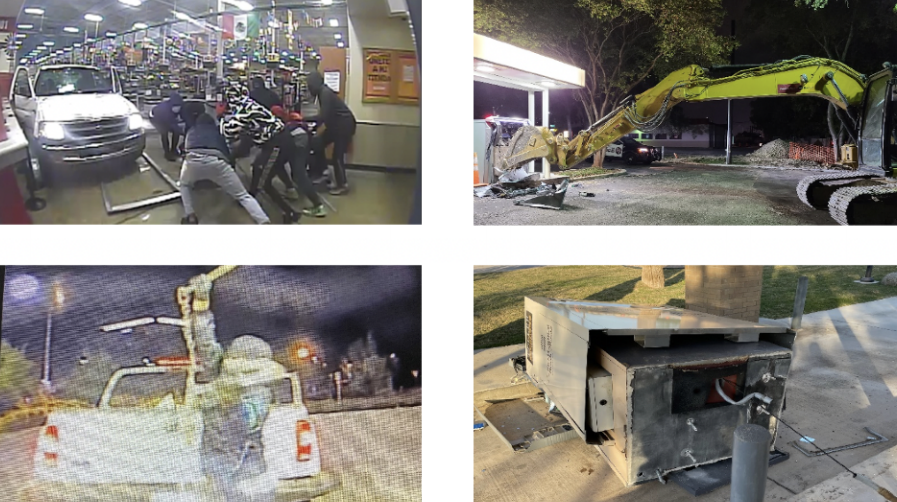
Four different ATM “chain gang” attacks in Texas recently. Image: Texas Bankers Association.

The Texas Bankers Association documented at least 139 chain gang attacks against Texas financial institutions in the year ending November 2020. The association says organized crime is the main source of the destructive activity, and that Houston-based FBI officials have made more than 50 arrests and are actively tracking about 250 individuals suspected of being part of these criminal rings.

From surveillance camera footage examined by fraud investigators, the perpetrators have followed the same playbook in each incident. The bad guys show up in the early morning hours with a truck or tractor that’s been stolen from a local construction site.

Then two or three masked men will pry the front covering from the ATM using crowbars, and attach heavy chains to the cash machine. The canisters of cash inside are exposed once the crooks pull the ATM’s safe door off using the stolen vehicle.

In nearly all cases, the perpetrators are done in less than five minutes.

Tracey Santor is the bond product manager for Travelers, which insures a large number of financial institutions against this type of crime. Santor said investigators questioning some of the suspects learned that the smash-and-grabs are used as a kind of initiation for would-be gang members.

“One of the things they found out during the arrest was the people wanting to be in the gang were told they had to bring them $250,000 within a week,” Santor said. “And they were given instructions on how to do it. I’ve also heard of cases where the perpetrators put construction cones around the ATM so it looks to anyone passing by that they’re legitimately doing construction at the site.”

Santor said the chain gang attacks have spread to other states, and that in the year ending June 2021 Travelers saw a 257 percent increase in the number of insurance claims related to ATM smash-and-grabs.

That 257 percent increase also includes claims involving incidents where attackers will crash a stolen car into a convenience store, and then in the ensuing commotion load the store’s ATM into the back of the vehicle and drive away.

In addition to any cash losses — which can often exceed $200,000 — replacing destroyed ATMs and any associated housing can take weeks, and newer model ATMs can cost $80,000 or more.

“It’s not stopping,” Santor said of the chain gang attacks. “In the last year we counted 32 separate states we’ve seen this type of attack in. Normally we are seeing single digits across the country. 2021 is going to be the same or worse for us than last year.”

Increased law enforcement scrutiny of the crime in Texas might explain why a number of neighboring states are seeing a recent uptick in the number of chain gang attacks, said Elaine Dodd, executive vice president of the fraud division for the Oklahoma Bankers Association.

“We have a lot of it going on here now and they’re getting good at it,” Dodd said. “The numbers are surging. I think since Texas has focused law enforcement attention on this it’s spreading like fingers out from there.”

Chain gang members at work on a Texas bank ATM. Image: Texas Bankers Association.

It’s not hard to see why physical attacks against ATMs are on the rise. In 2019, the average amount stolen in a traditional bank robbery was just $1,797, according to the FBI.

In contrast, robbing ATMs is way less risky and potentially far more rewarding for the perpetrators. That’s because bank ATMs can typically hold hundreds of thousands of dollars in cash.

Dodd said she hopes to see more involvement from federal investigators in fighting chain gang attacks, and that it would help if more of these attacks were prosecuted as bank robberies, which can carry stiff federal penalties. As it is, she said, most incidents are treated as property crimes and left to local investigators.

“We had a rash of three attacks recently and contacted the FBI, and were told, ‘We don’t work these,’” Dodd said. “The FBI looks at these attacks not as bank robbery, but just the theft of cash.”

In January, Texas lawmakers are introduced legislation that would make destroying an ATM a third degree felony offense. Such a change would mean chain gang members could be prosecuted with the same zeal Texas applies to people who steal someone’s livestock, a crime which is punishable by 2-10 years in prison and a fine of up to $10,000 (or both).

“The bottom line is, right now bank robbery is a felony and robbing an unattended ATM is not,” Santor said.

KrebsOnSecurity checked in with the European ATM Security Team (EAST), which maintains statistics about fraud of all kinds targeting ATM operators in Europe. EAST Executive Director Lachlan Gunn said overall physical attacks on ATMs in Europe have been a lot quieter since the pandemic started.

“Attacks fell right away during the lockdowns and have started to pick up a little as the restrictions are eased,” Gunn said. “So no major spike here, although [the United States is] further ahead when it comes to the easing of restrictions.”

Gunn said the most common physical attacks on European ATMs continue to involve explosives —  such as gas tanks and solid explosives that are typically stolen from mining and construction sites.

“The biggest physical attack issue in Europe remains solid explosive attacks, due to the extensive collateral damage and the risk to life,” Gunn said.

The Texas Bankers Association report, available here (PDF), includes a number of recommended steps financial institutions can take to reduce the likelihood of being targeted by chain gangs.

Premium Domain Names – transcom.uk
Transcom ISP – The UK’s Best Business ISP
DoubleCheck any website at doublecheck.uk

Trump Sues Facebook, Google and Twitter

Trump Sues Facebook, Google and Twitter

Former US president Donald Trump has filed lawsuits accusing three California-based tech giants of illegally censoring him.

On Wednesday, Trump filed proposed class-action lawsuits in the US District Court in Miami against Twitter, Facebook, Alphabet Inc’s Google (parent of YouTube) and their CEOs.

In the suits, Trump alleges that the social media platforms violated the right to freedom of speech guaranteed by the First Amendment of the US Constitution, and he calls for a court order to end the alleged censorship. 

The 45th president’s access to the platforms was restricted after protestors forced their way into the Capitol building on January 6. 

Trump was among the tens of thousands of Twitter users whose accounts were permanently suspended after the unprecedented event. The company accused Trump of glorifying violence.

Facebook banned the once beloved reality TV star from its platform for a period of two years, while YouTube said in March that it is considering reinstating Trump’s suspended account.

Commenting on tech companies’ banning the former leader of the free world from social media, French finance minister Bruno Le Maire said that big tech was “one of the threats to democracy” and that “the regulation of digital giants cannot be done by the digital oligarchy itself.”

Eduardo Bolsonaro, son of Brazilian president Jair Bolsonaro, reflected that a world in which Venezuela’s authoritarian leader Nicolas Maduro is on social media, but Trump is suspended “cannot be normal.”

While filing the suits on Wednesday, Trump called the legal action “a very beautiful development for our freedom of speech.”

He said that he was requesting a court in Florida “to order an immediate halt to social media companies’ illegal, shameful censorship of the American people.”

In 2020, Trump signed an executive order on how Americans’ First Amendment right to free speech should be applied to modern communications technology. In it, he described social media platforms as the “21st century equivalent of the public square” and accused them of “engaging in selective censorship that is harming our national discourse.”

World leaders with active social media accounts include Russian president Vladimir Putin, who banned same-sex marriage, and Iran’s leader, the grand ayatollah Ali Khamenei, whose regime was found guilty of committing gross human rights abuses, including the “systematic and widespread” murder of political opponents. 

Premium Domain Names – transcom.uk
Transcom ISP – The UK’s Best Business ISP
DoubleCheck any website at doublecheck.uk