AXA Faces DDoS After Ransomware Attack

AXA Faces DDoS After Ransomware Attack

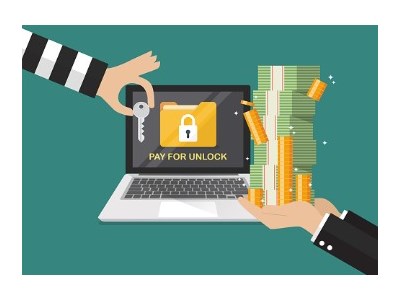
Insurance giant AXA could face a barrage of DDoS attacks if it refuses to engage with a ransomware group that claims to have stolen terabytes of data from some of its Asia customers.

It emerged over the weekend that partners of the French multinational had been struck by the Avaddon variant, which claimed to have encrypted data in Thailand, the Philippines, Hong Kong and Malaysia.

The group also claimed to have stolen 3TB of highly sensitive data including customer HIV and STD reports, customer and doctor ID documents and bank account details, and much more.

According to the post on its leak site, republished by Heimdal Security, the insurance group has 10 days from Saturday before Avaddon launches DDoS attacks on its network, in a bid to force payment.  

Some passport details touted as part of the breach have already been leaked, as is customary, to show the group means business.

The incident comes just days after AXA announced a new policy in France whereby it would no longer reimburse customers for any ransomware payments made to threat groups. The stance had been praised by security experts who believe that cyber-insurance payments are perpetuating the global problem of ransomware.

ImmuniWeb founder and CEO, Ilia Kolochenko, argued that the jurisdictions affected have weaker data protection regulations than Europe.

“The financial and legal consequences of the breach in the EU or Singapore would have been much higher,” he added. “This incident also emphasizes the importance of a third-party risk management program to protect corporate data.”

Martin Jartelius, CSO of Outpost24, added that the size of the claimed data haul is particularly worrying in an age when privacy-by-design should be paramount.

“Ransomware and targeted breaches are a threat to all organizations and can be extremely difficult to protect against. But here the leaked information, and the existence of such information to leak, is more concerning,” he said.

“As always when someone prepared to commit crimes to get money give you a promise not to release in the case money is awarded, there is little to nothing to support that they will not be back asking for more money again, and again.”

Premium Domain Names – transcom.uk
Transcom ISP – The UK’s Best Business ISP
DoubleCheck any website at doublecheck.uk

#RSAC: Bruce Schneier Warns of the Coming AI Hackers

#RSAC: Bruce Schneier Warns of the Coming AI Hackers

Artificial intelligence, commonly referred to as AI, represents both a risk and a benefit to the security of society, according to Bruce Schneier, security technologist, researcher, and lecturer at Harvard Kennedy School.

Schneier made his remarks about the risks of AI in an afternoon keynote session at the 2021 RSA Conference on May 17. Hacking for Schneier isn’t an action that is evil by definition; rather, it’s about subverting a system or a set of rules in a way that is unanticipated or unwanted by a system’s designers.

“All systems of rules can be hacked,” Schneier said. “Even the best-thought-out sets of rules will be incomplete or inconsistent, you’ll have ambiguities and things that designers haven’t thought of, and as long as there are people who want to subvert the goals in a system, there will be hacks.”

Hacking AI and the Explainability Problem

Schneier highlighted a key challenge with hacking that is conducted by some form of AI: it might be difficult to detect. Even if the hack is detected, it will be difficult to understand what exactly happened.

The so-called explainability problem is one that has been tackled in the popular cult classic science fiction novel The Hitchhiker’s Guide to the Galaxy. Schneier recounted that in that novel a race of hyper-intelligent pan-dimensional beings build the universe’s most powerful computer, called Deep Thought, to answer the ultimate question of life, the universe, and everything. The answer was 42.

“Deep Thought was unable to explain its answer, or even what the question was, and that is the explainability problem,” Schneier said. “Modern AIs are essentially black boxes: data goes one in one end, and the answer comes out the other.”

Schneier noted that researchers are working on explainable AI, but he doesn’t expect it to yield any short-term results for several reasons. In his view, explanations of how AI works are actually a cognitive shorthand used by humans, suited for the way humans make decisions.

“Forcing an AI to produce a human-understandable explanation is an additional constraint, and it could affect the quality of its decisions,” he said. “Certainly in the near term AI is becoming more opaque, less explainable.

While a world filled with AI hackers is still science fiction, it’s not stupid science fiction.Bruce Schneier

AI Hackers on the Horizon

At present, Schneier doesn’t see the mass application of AI for malicious hacking activities by threat adversaries, though that is a possible future that organizations should start to prepare against.

“While a world filled with AI hackers is still science fiction, it’s not stupid science fiction,” Schneier said.

To date, Schneier has observed that malicious hacking has been an exclusively human activity, as searching for new hacks requires expertise, creativity, time, and luck. When AI systems are able to conduct malicious hacking activities, he warned, they will operate at a speed and scale no human could ever achieve.

“As AI systems get more capable, society will cede more and more important decisions to them, which means that hacks of those systems will become more damaging,” he said. “These hacks will be perpetrated by the powerful against us.”

Defending Against AI Hackers

While the first part of Schneier’s talk was a grim and sobering sermon on the risks of AI hacking, there are potential upsides for cybersecurity as well.

“When AI is able to discover new software vulnerabilities in computer code, it will be an incredible boon to hackers everywhere,” Schneier said. “But that same technology will be useful for defense as well.”

A potential future AI tool could be deployed by a software vendor to find software vulnerabilities in its own code and automatically provide a fix. It’s a potential future that could eliminate software vulnerabilities as we know them today, Schneier stated optimistically.

“While it’s easy to let technology lead us into the future, we’re much better off if we as a society decide what technology’s role in our future should be,” Schneier concluded. “This is something we need to figure out now before these AIs come online and start hacking our world.”

Premium Domain Names – transcom.uk
Transcom ISP – The UK’s Best Business ISP
DoubleCheck any website at doublecheck.uk

Adding a Russian Keyboard to Protect against Ransomware

A lot of Russian malware — the malware that targeted the Colonial Pipeline, for example — won’t install on computers with a Cyrillic keyboard installed. Brian Krebs wonders if this could be a useful defense:

In Russia, for example, authorities there generally will not initiate a cybercrime investigation against one of their own unless a company or individual within the country’s borders files an official complaint as a victim. Ensuring that no affiliates can produce victims in their own countries is the easiest way for these criminals to stay off the radar of domestic law enforcement agencies.

[…]

DarkSide, like a great many other malware strains, has a hard-coded do-not-install list of countries which are the principal members of the Commonwealth of Independent States (CIS) — former Soviet satellites that mostly have favorable relations with the Kremlin.

[…]

Simply put, countless malware strains will check for the presence of one of these languages on the system, and if they’re detected the malware will exit and fail to install.

[…]

Will installing one of these languages keep your Windows computer safe from all malware? Absolutely not. There is plenty of malware that doesn’t care where in the world you are. And there is no substitute for adopting a defense-in-depth posture, and avoiding risky behaviors online.

But is there really a downside to taking this simple, free, prophylactic approach? None that I can see, other than perhaps a sinking feeling of capitulation. The worst that could happen is that you accidentally toggle the language settings and all your menu options are in Russian.

Premium Domain Names – transcom.uk
Transcom ISP – The UK’s Best Business ISP
DoubleCheck any website at doublecheck.uk

Elevate Your Financial Security: How to Safely Bank Online

Today’s technology allows you to complete various tasks at the touch of a button wherever you go. As a result, you place trust in online services that make everyday chores more convenient without second-guessing their effects. One such service is online banking. More Canadians are doing their banking virtually with over 76% using online or mobile devices. Despite the extensive measures that banks take to strengthen their online security, no system is fail-safe. It is extremely important to practice proper security habits and be on the lookout for online fraud to ensure the safety of your financial information.  

The Risks of Online and Mobile Banking  

According to the Canadian Bankers Association (CBA), banks in Canada use sophisticated technology and layers of security to help protect customers from fraud when doing their banking online or using a mobile banking app. Although online banking is generally safe, it does provide cybercriminals with a potentially lucrative opportunity. Some scammers turn to phishing techniques to trick people into handing over their sensitive personal information. They call, text, or email you claiming to be a representative from your bank and state that they noticed some unusual activity related to your accountThe imposters then ask you to click on a link in the email or text message to verify your credentials. Unfortunately, this “verification link” is actually a phishing link, and cybercriminals can use the password or credit card details to walk right into your account. 

Once cybercriminals gain access to your password and username, they may then move on to credential stuffing. Credential stuffing occurs when an attacker inserts the username and password for one account into the login page of another online serviceThis tactic capitalizes on the fact that many people reuse the same username and password across multiple accounts. 

Hackers also use phishing to spread malware onto the devices you use to access online banking servicesThese suspicious emails and text messages disguised as notifications from your bank could contain malicious links or attachments that trick you into downloading malware on your deviceFurthermore, attackers mimic banking and money transfer institutions to collect your credentials and access your sensitive information. 

Put Your Privacy First When Online Banking  

The convenience of paying bills and depositing checks without running to the bank or post office is undeniable. Everyone is always rushing about, so if you’re now doing these things online securing your online privacy is not a responsibility to speed through.  

It’s important that you put your privacy first when using online and mobile banking platforms so you can use these convenient services without jeopardizing your financial accountsFollow these tips to enhance your online banking security:  

1. Manage your bank account responsibly 

Review your bank’s terms and conditions to understand your responsibilities as the account owner and the responsibilities of your bank. Check your accounts regularly for transactions you didn’t make and contact your financial provider as soon as you find an error. Most banks have policies that reimburse you for unauthorized purchases if someone uses your credit card without your permission.  

2. Choose a strong, unique password 

Look at the recommendations provided by your bank, for example, CIBC recommends using longer passwords for your bank account that include a combination of uppercase, lowercase, numbers, and special characters. Additionally, do not reuse this password across your other accounts. If a hacker guesses your password for one of your online accounts, it’s likely that they will check for repeat credentials across multiple sites. By using different passwords or passphrases, you can feel secure knowing that the majority of your data is secure if one of your accounts becomes vulnerable. If you’re worried about forgetting your passwords, subscribe to a password management tool that will remember them for you.   

3. Use multi-factor authentication  

Always opt-in for two- or multi-factor authentication if your financial institution offers it. This is a method of signing in that requires not only a username and password but also a one-time code that is sent by text or email. This extra layer of verification makes it much harder for a criminal to access your sensitive accounts.  

4. Vet third-party apps and platforms 

From splitting the check when eating out with friends to dividing the cost of bills, third-party mobile payment apps are an incredibly easy way to share money. Before downloading these appsdo your research. Ensure that the company behind the app or the app itself hasn’t undergone any major security incidents and that they have a history of patching bugs immediately. If you decide to download a mobile payment app, set your account to private and limit the amount of data you share. Additionally, look for the lock icon in your web browser when logging in to online banking platforms. A closed lock or padlock indicates that the website you’re on is secure. 

5. Learn how to recognize phishing 

Phishing scammers often undo their own plans by making simple mistakes that are easy to spot once you know how to recognize them. These mistakes include spelling or grammar errors throughout the email or text message, using a company’s logo with the incorrect aspect ratio or low resolution, and using a URL with typos. For example, phishers may swap an “o” with a zero, or end the address with “.con” instead of “.com.”  If you receive a message with any of these characteristics, do not click on any of the links and delete it immediately.  

6. Connect to a VPN 

Never conduct your banking business on a public or unsecured wi-fi network. Connect to avirtual private network (VPN), which allows you to send and receive data while encrypting your information. When your data traffic is scrambled, it’s shielded from prying eyes, which protects your network and the devices connected to it. 

Invest in Your Digital Security  

While online banking adds a wealth of convenience to your lives, it’s important that you remain invested in your security first and foremost. Cybercriminals often take advantage of your reliance on digital platforms to disguise themselves as bank representatives and trick you into handing over your personal data. To remain secure while online banking, practice good cybersecurity hygiene by using strong, unique passwords, multi-factor authentication, and stay vigilant while looking for signs of phishing. These tips will help elevate your financial security so you can virtually bank with peace of mind.  

Stay Updated 

To stay updated on all things McAfee and on top of the latest consumer and mobile security threats, follow @McAfee_Home on Twitter, subscribe to our newsletter, listen to our podcast Hackable?, and ‘Like’ us on Facebook.

The post Elevate Your Financial Security: How to Safely Bank Online appeared first on McAfee Blogs.

Premium Domain Names – transcom.uk
Transcom ISP – The UK’s Best Business ISP
DoubleCheck any website at doublecheck.uk

Mission Possible: Hunting Down and Stopping Stealthy Attackers with MVISION XDR

Imagine, if you will, a scene straight out of one of your favorite impossible mission movies. The background music is driving a suspenseful beat while the antagonist attempts to steal the latest technology from a very favored industry competitor called Rad-X Incorporated. It’s a trade secret that will change the industry forever, and if the villain achieves her mission, she will hold the future of aviation in the palm of her hand. She’s bypassed laser motion detectors, swung from the ceiling to avoid floor placed pressure plates, and even performed some seriously intense acrobatics to slip through video surveillance mechanisms. Then, at the apex of suspense while the music ascends to a crescendo, a hard thumping release, she reaches out to grasp a microchip placed in the center of the room on a pedestal as if the room were designed only to show off its magnificence. As her fingers gently nestle against the circuit… the music stops, the alarms sound, and she walks out completely and utterly undisturbed!

All the components in this scene were meant to record and detect when an activity occurs. But when we needed it most all that it amounts to is a noisy detection capability. It did not actually “prevent” the malicious actor from doing anything. Instead, the system merely let everyone know that it occurred… very anticlimactic if you ask me, and frankly not very useful if you’re the good guy.

Deconstructing the SIEM, Log by Log

SIEM technologies have been used in security operations for over 15 years for a few reasons. First, SOCs must be able to tell a story while performing incident response investigations. And to go back in time effectively, logged events of these activities can be more easily accessed if the events are stored centrally and for an appropriate longevity. So, when the police show up, the victim can accurately name the perpetrator. Next, because the data sources are so disparate, SIEMs can be used to correlate activities among usually unrelated feeds. For example, if a floor plate triggered, then a motion sensor fires within 15 seconds of each other, their collective severity may raise more of an alarm. And thirdly, centrally reporting on collective data allows the business to identify where it is effectively investing in control technologies. In this extended example, the victim can run a report monthly showing that the microchip pressure sensor triggered 5 times this month, while the others may have triggered only once or twice. Certainly, all these capabilities are just as important today as they were in 2005.

But there is one glaring gap: why isn’t there a better way to take corrective action after the incident occurs? Extended Detection and Response (XDR) capabilities have some similar outcomes as we would expect in 2021, but with an added response component… and in McAfee’s case, many response components. Some capabilities overlap SIEM’s, which is natural based on each use case, but both of which are still essential to the modern security operations program.

Figure 1: SIEM vs XDR Capabilities

If You See Something, Do Something

While SIEM technologies, for the most part, allow its administrators to integrate through APIs with other technologies, the actions available are often limited in nature and fail to provide a seamless and consistent response option across the landscape. XDR, however, does just that. The platform is designed such that whether the system on which you are acting is an endpoint, network component, or cloud service, the security operations practitioner should expect to enjoy an intimate level of native control on that security control device. Performing actions like restricting further access, retrieving additional information, or gaining console capabilities should be as simple as a click of a button. With XDR, when the alarm sounded, Rad-X would have been able to simply click a button to lock the vaulted room and apprehend the perpetrator.

And since this is a differentiator between XDR and SIEM platforms, it should stand to reason that response capabilities should be a key factor when comparing XDR providers. McAfee offers some of the most robust response capabilities right out of the box such as quarantining affected assets, while simultaneously offering the ability to write your own for Windows, MacOS, or Linux.

Go Where The Data Is – At the Source

While it is painfully apparent that data entering data lakes and massive data collections are regularly changing, data types are changing almost as frequently. SIEM technology, which is heavily based on collectors, parsing, enrichment, ontology, and more, often fails to address the ongoing change of data types on the data source. This means that the collectors need to be updated frequently. However, what if the data was first triaged and analyzed at the source and the results delivered to the collection and correlation points? This would address a large portion of the data type challenge while simultaneously expecting and embracing the idea that the data will continue to live at its source. Sure, there may be cases where the raw data needs to be shipped to mass storage for historical searching and hunting, but those are the minority of the cases. And, since the goal of XDR is not to meet log retention requirements as a compliance tool, it need not focus on collecting all events created.

When running a search in XDR platform, such as McAfee’s MVISION XDR, the searches can be run against mass storage or in real-time. Realtime searches allow the data source to perform the query against the raw origination of the event. And, since both capabilities are available, comparing deltas between the state of the data source is easily done. If Rad-X, were using XDR they would be able to ask questions of the corridors, cameras, and entry ways the villain was using throughout the attack. Instead, they were forced to wait for an event significant enough to have occurred to be alerted that the incident was now in the past.

Figure 2: XDR Logical Architecture

Figure 3: Traditional SIEM Architecture

As you can tell from the illustrations above, XDR offers security teams a simpler cloud-native service architectural model when compared to traditional SIEM.  The majority of SIEM deployments require all the native infrastructure to be deployed as on-premises software or appliances or in IaaS. XDR can reduce the complexity of your security configuration and the expert resources required to operate it.

Hot Pursuit: A Proactive Approach to Finding Threats

Rad-X’s CEO wants answers, and he wants them now! How did this happen? Did we know about this criminal and anything she may have been up to? Were we the only targets? What is our best course of action to investigate what happened here?

MVISION XDR is designed to answer exactly these questions.

MVISION XDR goes beyond consolidation of endpoint detection and response (EDR), network detection and response (NDR), and cloud detection and response capabilities as it leverages threat intelligence and analytical posture assessments from MVISION Insights to guide its ability to predict, to prescribe, and to help prioritize what’s most important in your organization. MVISION Insights would help Rad-X shift its focus left of the moment of impact by telling its defenders about the pending threats from the threat actor. Knowing that she was targeting aviation innovators and that Rad-X was in her line-of-sight would have helped, but it would also call out the gaps in defense capabilities based on her techniques and procedures.

Then, even if the incident were to still have occurred, MVISION XDR would be able to take advantage of its Artificial Intelligence data analytics by examining how the intruder behaved, what kind of artifacts were left behind on the floor, and what may be missing from the environment which “should” be there. It’s like having a virtual Sherlock Holmes analyzing each of your XDR incidents across endpoints, network, and cloud environments.

Mission Accomplished: Go Beyond the Limits with MVISION XDR

Rad-X suffered an unfortunate event, but they learned an incredibly valuable lesson: SIEM is important as it meets some critical functions, but XDR is more appropriate in performing action driven investigations, threat analytics, rapid response, and more. So, if you find yourself in a position like Rad-X and are curious about the value and benefits of XDR in your environment, take a page out of Rad-X’s playbook and consider MVISION XDR to provide a shift left in threat predictions, prescriptions, and prioritization. Consider MVISION XDR to enhance your incident analytics capabilities with cloud-based AI playbooks. And consider MVISION XDR to provide detection and response capabilities from device to cloud.

If you’d like to learn more about what MVISION XDR can do for you and how it is evolving at McAfee, join me for a live tech talk on May 25, 2021.  I’ll be joined by Randy Kersey, XDR Product Manager at McAfee, to discuss how security operations teams can respond more effectively to incidents by harnessing their extensive security telemetry with the latest release of MVISION XDR. Be sure to register via LinkedIn. I hope to see you there!

The post Mission Possible: Hunting Down and Stopping Stealthy Attackers with MVISION XDR appeared first on McAfee Blogs.

Premium Domain Names – transcom.uk
Transcom ISP – The UK’s Best Business ISP
DoubleCheck any website at doublecheck.uk