DoJ Steps Up Investigation into NSO Group – Report

DoJ Steps Up Investigation into NSO Group – Report

The US government appears to be stepping up its investigation into a controversial spyware developer currently locked in a legal battle with WhatsApp.

Lawyers with the Department of Justice (DoJ) recently requested more technical information from the Facebook messaging business regarding its court case, a person with knowledge of the matter told The Guardian.

WhatsApp took Israeli firm NSO Group to court in the US in 2019, alleging the latter was directly responsible for cyber-espionage attacks deploying Pegasus spyware on 1400 of its users.

The messaging giant claimed that the “attackers used servers and internet-hosting services that were previously associated with NSO.”

Journalists, human rights activists, political dissidents, and senior government officials were among those allegedly targeted, with most victims located in Bahrain, the United Arab Emirates and Mexico, said WhatsApp at the time.

It’s unclear how far along the DoJ is in its investigation. It’s claimed the FBI was originally looking in to the matter but the case stalled in early 2020.

NSO Group has consistently argued that its products are only sold to legitimate law enforcement agencies and governments. It is currently arguing in a US Court of Appeals that it should be granted sovereign immunity as a result.

This has dismayed some in the industry. In December last year, Microsoft, Google, Cisco and a host of other big-name tech firms filed an amicus brief in support of Facebook’s position.

Microsoft argued at the time that NSO Group’s products threaten human rights by arming autocratic regimes with repressive tools, and could quite easily end up in the wrong hands, like the Shadow Brokers breach which ultimately led to WannaCry and NotPetya.

Although governments are bound by international laws and diplomatic norms, private companies like NSO Group are motivated only by profit and therefore should not be allowed to claim sovereign immunity, he concluded.

Premium Domain Names – transcom.uk
Transcom ISP – The UK’s Best Business ISP
DoubleCheck any website at doublecheck.uk

Mysterious Macintosh Malware

This is weird:

Once an hour, infected Macs check a control server to see if there are any new commands the malware should run or binaries to execute. So far, however, researchers have yet to observe delivery of any payload on any of the infected 30,000 machines, leaving the malware’s ultimate goal unknown. The lack of a final payload suggests that the malware may spring into action once an unknown condition is met.

Also curious, the malware comes with a mechanism to completely remove itself, a capability that’s typically reserved for high-stealth operations. So far, though, there are no signs the self-destruct feature has been used, raising the question of why the mechanism exists.

Besides those questions, the malware is notable for a version that runs natively on the M1 chip that Apple introduced in November, making it only the second known piece of macOS malware to do so. The malicious binary is more mysterious still because it uses the macOS Installer JavaScript API to execute commands. That makes it hard to analyze installation package contents or the way that package uses the JavaScript commands.

The malware has been found in 153 countries with detections concentrated in the US, UK, Canada, France, and Germany. Its use of Amazon Web Services and the Akamai content delivery network ensures the command infrastructure works reliably and also makes blocking the servers harder. Researchers from Red Canary, the security firm that discovered the malware, are calling the malware Silver Sparrow.

Feels government-designed, rather than criminal or hacker.

Another article. And the Red Canary analysis.

Premium Domain Names – transcom.uk
Transcom ISP – The UK’s Best Business ISP
DoubleCheck any website at doublecheck.uk

Hacking Proprietary Protocols with Sharks and Pandas

The human race commonly fears what it doesn’t understand.  In a time of war, this fear is even greater if one side understands a weapon or technology that the other side does not.  There is a constant war which plagues cybersecurity; perhaps not only in cybersecurity, but in the world all around us is a battle between good and evil.  In cyber security if the “evil” side understands or pays more attention to a technology than the “good” side, we see a spike in cyber-attacks.

This course of events demands that both offensively and defensively minded “good guys” band together to remove the unknown from as much technology as possible.  One of the most common unknown pieces of technology in cybersecurity that professionals see on a regular basis are proprietary protocols running across their networks.  By using both the tactics and perspectives from red and blue teams it is possible to conquer and understand these previously unknown packets.  This strategy is exactly what we, Douglas McKee and Ismael Valenzuela, hoped to communicate in our webinar ‘Thinking Red, Acting Blue: Hacking Proprietary Protocols”.

Proprietary protocols are typically a mystery to many practitioners.  Vendors across many industries develop them for very specific purposes and technologies.  We see them in everything from the Internet of Things (IOT), to Industrial Controls Systems (ICS), to medical devices and more.   Since by its nature “proprietary” technology is not shared, there is generally no public Request for Comments (RFC) or public disclosure on how they work.  This provides an opportunity for attackers and a challenge for defenders.  Attackers are aware these networking protocols are less reviewed and therefore more susceptible to vulnerabilities, while defenders have a hard time understanding what valid or benign traffic looks like.   Unfortunately, attackers are generally more financially motivated to spend the time reversing these protocols than defenders, since the rewards can be very substantial.

During the webinar we discussed a two-prong approach to tackling these unknown protocols with the goal of a deeper understanding of this data.  A red team’s purpose may be to look for vulnerabilities, while a blue team may be more interested in detecting or flagging unusual behavior in this traffic.   We discuss how this can be accomplished through visual inspection using Wireshark to compare the traffic across multiple conversations, and we complemented this analysis with python libraries like pandas, numpy and matplotlib, for data exploration and visualization.

For example, consider the packets in the Wireshark captures side-by-side in Figure 1.   An astute reader may notice that the UDP packets are evenly spaced between each other within the same PCAP, yet differently spaced between pcaps.

In protocol analysis this can indicate the use of a status or “heartbeat” packet, which may contain some type of data where the interval it is sent is negotiated for each conversation.  We have seen this as a common trait in proprietary protocols.  This can be difficult for a cybersecurity professional to discern with a small amount of data, but could be very helpful for further analysis.  If we import the same data into pandas dataframes and we add matplotlib visualizations to our analysis, the behavior becomes much clearer as seen in Figure 2.

By using the reverse engineering perspective of a vulnerability researcher combined with the data analysis insight of a defender, we can strengthen and more quickly understand the unknown.  If this type of deep technical analysis of proprietary protocols interests you, we encourage you to check out the recording of our presentation below.  We have made all of our resources public on this topic, including pcaps and python code in a Jupyter Notebook, which can be found on Github and Binder.   It is important as an industry that we don’t give into fear of the unknown or just ignore these odd looking packets on our network, but instead lean in to understand the security challenges proprietary protocols can present and how to protect against them.

The post Hacking Proprietary Protocols with Sharks and Pandas appeared first on McAfee Blogs.

Premium Domain Names – transcom.uk
Transcom ISP – The UK’s Best Business ISP
DoubleCheck any website at doublecheck.uk

Microsoft: Chinese Cyberspies Used 4 Exchange Server Flaws to Plunder Emails

Microsoft Corp. today released software updates to plug four security holes that attackers have been using to plunder email communications at companies that use its Exchange Server products. The company says all four flaws are being actively exploited as part of a complex attack chain deployed by a previously unidentified Chinese cyber espionage group.

The software giant typically releases security updates on the second Tuesday of each month, but it occasionally deviates from that schedule when addressing active attacks that target newly identified and serious vulnerabilities in its products.

The patches released today fix security problems in Microsoft Exchange Server 2013, 2016 and 2019. Microsoft said its Exchange Online service — basically hosted email for businesses — is not impacted by these flaws.

Microsoft credited researchers at Reston, Va. based Volexity for reporting the attacks. Volexity President Steven Adair told KrebsOnSecurity it first spotted the attacks on Jan. 6, 2021.

Adair said while the exploits used by the group may have taken great skills to develop, they require little technical know-how to use and can give an attacker easy access to all of an organization’s email if their vulnerable Exchange Servers are directly exposed to the Internet.

“These flaws are very easy to exploit,” Adair said. “You don’t need any special knowledge with these exploits. You just show up and say ‘I would like to break in and read all their email.’ That’s all there is to it.”

Microsoft says the flaws are being used by a previously unknown Chinese espionage group that’s been dubbed “Hafnium,” which is known to launch its attacks using hosting companies based in the United States.

“Hafnium primarily targets entities in the United States across a number of industry sectors, including infectious disease researchers, law firms, higher education institutions, defense contractors, policy think tanks, and NGOs,” Microsoft said. “HAFNIUM has previously compromised victims by exploiting vulnerabilities in internet-facing servers. Once they’ve gained access to a victim network, HAFNIUM typically exfiltrates data to file sharing sites like MEGA.”

According to Microsoft, Hafnium attackers have been observed combining all four zero-day flaws to target organizations running vulnerable Exchange Server products.

CVE-2021-26855 is a “server-side request forgery” (SSRF) flaw, in which a server (in this case, an on-premises Exchange Server) can be tricked into running commands that it should never have been permitted to run, such as authenticating as the Exchange server itself.

The attackers used CVE-2021-26857 to run code of their choice under the “system” account on a targeted Exchange server. The other two zero-day flaws — CVE-2021-26858 and CVE-2021-27065 — could allow an attacker to write a file to any part of the server.

After exploiting these vulnerabilities to gain initial access, Hafnium operators deployed web shells on the compromised server, Microsoft said. Web shells are essentially software backdoors that allow attackers to steal data and perform additional malicious actions that lead to further compromise.

Neither Microsoft nor Volexity is aware of publicly available code that would allow other cybercriminals to exploit these Exchange vulnerabilities. But given that these attacks are in the wild now, it may only be a matter of days before exploit code is publicly available online.

Microsoft stressed that the exploits detailed today were in no way connected to the separate SolarWinds-related attacks. “We continue to see no evidence that the actor behind SolarWinds discovered or exploited any vulnerability in Microsoft products and services,” the company said.

Further reading:

Microsoft’s writeup on new Hafnium nation state cyberattacks

Microsoft technical advisory on the four Exchange Server flaws

Premium Domain Names – transcom.uk
Transcom ISP – The UK’s Best Business ISP
DoubleCheck any website at doublecheck.uk

Payroll/HR Giant PrismHR Hit by Ransomware?

PrismHR, a company that sells technology used by other firms to help more than 80,000 small businesses manage payroll, benefits, and human resources, has suffered what appears to be an ongoing ransomware attack that is disrupting many of its services.
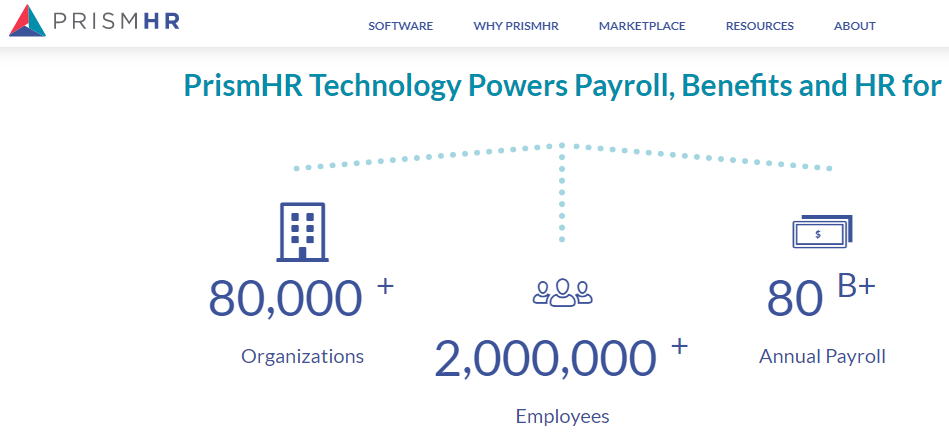
Hopkinton, Mass.-based PrismHR handles everything from payroll processing and human resources to health insurance and tax forms for hundreds of “professional employer organizations” (PEOs) that serve more than two million employees. The company processes more than $80 billion payroll payments annually on behalf of PEOs and their clients.

Countless small businesses turn to PEOs in part because they simplify compliance with various state payroll taxes, and because PEOs are the easiest way for small businesses to pool their resources and obtain more favorable health insurance rates for their employees.

PrismHR has not yet responded to requests for comment. But in a notice sent to its PEO partners, PrismHR said it detected suspicious activity within its networks on Feb. 28, and that it disabled access to its platform for all users in an effort to contain the security incident.

The company said the disruption has affected 200 PEO clients across the country, and that the most immediate concern is helping PEOs ensure their customers can process payrolls this week.

“The outage may extend throughout today and possibly later, with potential impact on payroll processing,” Prism explained in a template email it suggested PEO partners share with their customers. “We are committed to ensuring everyone receives their pay as timely and as accurately as possible. For this payroll period, we will use estimates from the last available payroll period. Once the software platform is back online, we will perform a reconciliation and correct any discrepancies as soon as possible.”

Jacob Cloran is co-founder of Decimal, a company that does accounting for small businesses, many of whom rely on PEOs affected by the PrismHR outage. Decimal itself uses a PEO that relies on PrismHR.

“We don’t have a good option to run our payroll this week, and the message we’ve received from our PEO doesn’t give me a lot of confidence we’ll be able to do that,” Cloran said.

Cloran said while there are other cloud-based companies that work with multiple PEOs, PrismHR is by far the largest.

“Prism is the only real option on the PEO software market,” he said. “Everyone I know who has tried any of the others ends up back at Prism. It’s the best of all bad available options.”

PrismHR did not specify what was responsible for the suspicious network activity, but their actions so far are straight out of the textbook recommendations for responding to a ransomware outbreak. A notice from the PEO working with some of Cloran’s clients stated that PrismHR was in the process of rebuilding its entire system from data backups in a new environment.

Also, the crooks behind ransomware attacks typically wait until the weekend to unleash their malware within victim organizations, knowing that most targets will be short-staffed or out of the office at this time. PrismHR said it detected the activity on Sunday.

Ransomware victims perhaps in the toughest spot include those providing cloud data hosting and software-as-service offerings, as these businesses are often unable to serve their customers while a ransomware infestation is active.

Ransomware renders any files it touches unreadable unless and until a victim pays for a digital key needed to unlock the encryption on them. Worse, it has become almost a best practice among ransomware criminal groups to steal as much data as possible from the victim organization prior to unleashing the ransom malware within a target environment.

Some of that data is often then published on dark web victim shaming sites in a bid to force the victim company into paying up. Some companies victimized by ransomware even face dual ransom demands: One for a digital key needed to unlock access to files, and a second payment in exchange for a promise not to publish all of the stolen data. Those that refuse to be extorted are told to expect that huge amounts of sensitive company data will be published online or sold on the dark web (or both).

PrismHR said in a statement to its PEO customers that while its investigation and response to the incident is ongoing, the company “is not aware of any sensitive data being breached or compromised.”

Given the volume and sensitive nature of the data PrismHR managed on behalf of PEO clients, it’s no doubt those clients and their customers are hoping that statement is accurate as well.


Premium Domain Names – transcom.uk
Transcom ISP – The UK’s Best Business ISP
DoubleCheck any website at doublecheck.uk