Hackers claim to have access to classified information linking the president to the origin of the coronavirus and criminal collusion with foreign actors.
The NSA has long sought agreements with technology companies under which they would build special access for the spy agency into their products, according to disclosures by former NSA contractor Edward Snowden and reporting by Reuters and others.
These so-called back doors enable the NSA and other agencies to scan large amounts of traffic without a warrant. Agency advocates say the practice has eased collection of vital intelligence in other countries, including interception of terrorist communications.
The agency developed new rules for such practices after the Snowden leaks in order to reduce the chances of exposure and compromise, three former intelligence officials told Reuters. But aides to Senator Ron Wyden, a leading Democrat on the Senate Intelligence Committee, say the NSA has stonewalled on providing even the gist of the new guidelines.
[…]
The agency declined to say how it had updated its policies on obtaining special access to commercial products. NSA officials said the agency has been rebuilding trust with the private sector through such measures as offering warnings about software flaws.
“At NSA, it’s common practice to constantly assess processes to identify and determine best practices,” said Anne Neuberger, who heads NSA’s year-old Cybersecurity Directorate. “We don’t share specific processes and procedures.”
Three former senior intelligence agency figures told Reuters that the NSA now requires that before a back door is sought, the agency must weigh the potential fallout and arrange for some kind of warning if the back door gets discovered and manipulated by adversaries.
The article goes on to talk about Juniper Networks equipment, which had the NSA-created DUAL_EC PRNG backdoor in its products. That backdoor was taken advantage of by an unnamed foreign adversary.
Juniper Networks got into hot water over Dual EC two years later. At the end of 2015, the maker of internet switches disclosed that it had detected malicious code in some firewall products. Researchers later determined that hackers had turned the firewalls into their own spy tool here by altering Juniper’s version of Dual EC.
Juniper said little about the incident. But the company acknowledged to security researcher Andy Isaacson in 2016 that it had installed Dual EC as part of a “customer requirement,” according to a previously undisclosed contemporaneous message seen by Reuters. Isaacson and other researchers believe that customer was a U.S. government agency, since only the U.S. is known to have insisted on Dual EC elsewhere.
Juniper has never identified the customer, and declined to comment for this story.
Likewise, the company never identified the hackers. But two people familiar with the case told Reuters that investigators concluded the Chinese government was behind it. They declined to detail the evidence they used.
Okay, lots of unsubstantiated claims and innuendo here. And Neuberger is right; the NSA shouldn’t share specific processes and procedures. But as long as this is a democratic country, the NSA has an obligation to disclose its general processes and procedures so we all know what they’re doing in our name. And if it’s still putting surveillance ahead of security.
On Monday, Oct. 26, KrebsOnSecurity began following up on a tip from a reliable source that an aggressive Russian cybercriminal gang known for deploying ransomware was preparing to disrupt information technology systems at hundreds of hospitals, clinics and medical care facilities across the United States. Today, officials from the FBI and the U.S. Department of Homeland Security hastily assembled a conference call with healthcare industry executives warning about an “imminent cybercrime threat to U.S. hospitals and healthcare providers.”
The agencies on the conference call, which included the U.S. Department of Health and Human Services (HHS), warned participants about “credible information of an increased and imminent cybercrime threat to US hospitals and healthcare providers.”
The agencies said they were sharing the information “to provide warning to healthcare providers to ensure that they take timely and reasonable precautions to protect their networks from these threats.”
The warning came less than 24 hours after this author received a tip from Alex Holden, founder of Milwaukee-based cyber intelligence firm Hold Security. Holden said he saw online communications this week between cybercriminals affiliated with a Russian-speaking ransomware group known as Ryuk in which group members discussed plans to deploy ransomware at more than 400 healthcare facilities in the U.S.
One participant on the government conference call today said the agencies offered few concrete details of how healthcare organizations might better protect themselves against this threat actor or purported malware campaign.
“They didn’t share any IoCs [indicators of compromise], so it’s just been ‘patch your systems and report anything suspicious’,” said a healthcare industry veteran who sat in on the discussion.
However, others on the call said IoCs may be of little help for hospitals that have already been infiltrated by Ryuk. That’s because the malware infrastructure used by the Ryuk gang is often unique to each victim, including everything from the Microsoft Windows executable files that get dropped on the infected hosts to the so-called “command and control” servers used to transmit data between and among compromised systems.
Nevertheless, cybersecurity incident response firm Mandiant today released a list of domains and Internet addresses used by Ryuk in previous attacks throughout 2020 and up to the present day. Mandiant refers to the group by the threat actor classification “UNC1878,” and aired a webcast today detailing some of Ryuk’s latest exploitation tactics.
Charles Carmakal, senior vice president for Mandiant, told Reuters that UNC1878 is one of most brazen, heartless, and disruptive threat actors he’s observed over the course of his career.
“Multiple hospitals have already been significantly impacted by Ryuk ransomware and their networks have been taken offline,” Carmakal said.
One health industry veteran who participated in the call today and who spoke with KrebsOnSecurity on condition of anonymity said if there truly are hundreds of medical facilities at imminent risk here, that would seem to go beyond the scope of any one hospital group and may implicate some kind of electronic health record provider that integrates with many care facilities.
So far, however, nothing like hundreds of facilities have publicly reported ransomware incidents. But there have been a handful of hospitals dealing with ransomware attacks in the past few days.
–Becker’s Hospital Reviewreported today that a ransomware attack hit Klamath Falls, Ore.-based Sky Lakes Medical Center’s computer systems.
–WWNY’s Channel 7 News in New York reported yesterday that a Ryuk ransomware attack on St. Lawrence Health System led to computer infections at Caton-Potsdam, Messena and Gouverneur hospitals.
–SWNewsMedia.comon Monday reported on “unidentified network activity” that caused disruption to certain operations at Ridgeview Medical Center in Waconia, Minn. SWNews says Ridgeview’s system includes Chaska’s Two Twelve Medical Center, three hospitals, clinics and other emergency and long-term care sites around the metro area.
This is a developing story. Stay tuned for further updates.
Update, 10:11 p.m. ET: The FBI, DHS and HHS just jointly issued an alert about this, available here.
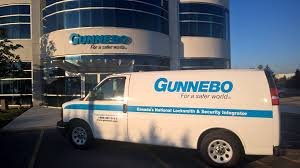
In March 2020, KrebsOnSecurity alerted Swedish security giant Gunnebo Group that hackers had broken into its network and sold the access to a criminal group which specializes in deploying ransomware. In August, Gunnebo said it had successfully thwarted a ransomware attack, but this week it emerged that the intruders stole and published online tens of thousands of sensitive documents — including schematics of client bank vaults and surveillance systems.
The Gunnebo Group is a Swedish multinational company that provides physical security to a variety of customers globally, including banks, government agencies, airports, casinos, jewelry stores, tax agencies and even nuclear power plants. The company has operations in 25 countries, more than 4,000 employees, and billions in revenue annually.
Acting on a tip from Milwaukee, Wis.-based cyber intelligence firm Hold Security, KrebsOnSecurity in March told Gunnebo about a financial transaction between a malicious hacker and a cybercriminal group which specializes in deploying ransomware. That transaction included credentials to a Remote Desktop Protocol (RDP) account apparently set up by a Gunnebo Group employee who wished to access the company’s internal network remotely.
Five months later, Gunnebo disclosed it had suffered a cyber attack targeting its IT systems that forced the shutdown of internal servers. Nevertheless, the company said its quick reaction prevented the intruders from spreading the ransomware throughout its systems, and that the overall lasting impact from the incident was minimal.
Earlier this week, Swedish news agency Dagens Nyheterconfirmed that hackers recently published online at least 38,000 documents stolen from Gunnebo’s network. Linus Larsson, the journalist who broke the story, says the hacked material was uploaded to a public server during the second half of September, and it is not known how many people may have gained access to it.
Larsson quotes Gunnebo CEO Stefan Syrén saying the company never considered paying the ransom the attackers demanded in exchange for not publishing its internal documents. What’s more, Syrén seemed to downplay the severity of the exposure.
“I understand that you can see drawings as sensitive, but we do not consider them as sensitive automatically,” the CEO reportedly said. “When it comes to cameras in a public environment, for example, half the point is that they should be visible, therefore a drawing with camera placements in itself is not very sensitive.”
It remains unclear whether the stolen RDP credentials were a factor in this incident. But the password to the Gunnebo RDP account — “password01” — suggests the security of its IT systems may have been lacking in other areas as well.
After this author posted a request for contact from Gunnebo on Twitter, KrebsOnSecurity heard from Rasmus Jansson, an account manager at Gunnebo who specializes in protecting client systems from electromagnetic pulse (EMP) attacks or disruption, short bursts of energy that can damage electrical equipment.
Jansson said he relayed the stolen credentials to the company’s IT specialists, but that he does not know what actions the company took in response. Reached by phone today, Jansson said he quit the company in August, right around the time Gunnebo disclosed the thwarted ransomware attack. He declined to comment on the particulars of the extortion incident.
Ransomware attackers often spend weeks or months inside of a target’s network before attempting to deploy malware across the network that encrypts servers and desktop systems unless and until a ransom demand is met.
That’s because gaining the initial foothold is rarely the difficult part of the attack. In fact, many ransomware groups now have such an embarrassment of riches in this regard that they’ve taken to hiring external penetration testers to carry out the grunt work of escalating that initial foothold into complete control over the victim’s network and any data backup systems — a process that can be hugely time consuming.
But prior to launching their ransomware, it has become common practice for these extortionists to offload as much sensitive and proprietary data as possible. In some cases, this allows the intruders to profit even if their malware somehow fails to do its job. In other instances, victims are asked to pay two extortion demands: One for a digital key to unlock encrypted systems, and another in exchange for a promise not to publish, auction or otherwise trade any stolen data.
While it may seem ironic when a physical security firm ends up having all of its secrets published online, the reality is that some of the biggest targets of ransomware groups continue to be companies which may not consider cybersecurity or information systems as their primary concern or business — regardless of how much may be riding on that technology.
Indeed, companies that persist in viewing cyber and physical security as somehow separate seem to be among the favorite targets of ransomware actors. Last week, a Russian journalist published a video on Youtube claiming to be an interview with the cybercriminals behind the REvil/Sodinokibi ransomware strain, which is the handiwork of a particularly aggressive criminal group that’s been behind some of the biggest and most costly ransom attacks in recent years.
In the video, the REvil representative stated that the most desirable targets for the group were agriculture companies, manufacturers, insurance firms, and law firms. The REvil actor claimed that on average roughly one in three of its victims agrees to pay an extortion fee.
Mark Arena, CEO of cybersecurity threat intelligence firm Intel 471, said while it might be tempting to believe that firms which specialize in information security typically have better cybersecurity practices than physical security firms, few organizations have a deep understanding of their adversaries. Intel 471 has published an analysis of the video here.
“The harsh and unfortunate reality is the security of a number of security companies is shit,” Arena said. “Most companies tend to have a lack of ongoing and up to date understanding of the threat actors they face.”
With Code42 Incydr, you can keep tabs on when and where your data is going — without restricting where or how your employees want to collaborate and work.