Using Pupil Reflection in Smartphone Camera Selfies

Researchers are using the reflection of the smartphone in the pupils of faces taken as selfies to infer information about how the phone is being used:

For now, the research is focusing on six different ways a user can hold a device like a smartphone: with both hands, just the left, or just the right in portrait mode, and the same options in horizontal mode.

It’s not a lot of information, but it’s a start. (It’ll be a while before we can reproduce these results from Blade Runner.)

Research paper.

—————
Free Secure Email – Transcom Sigma
Boost Inflight Internet
Transcom Hosting
Transcom Premium Domains

Instagram Credentials Stealer: Disguised as Mod App

Authored by Dexter Shin 

McAfee’s Mobile Research Team introduced a new Android malware targeting Instagram users who want to increase their followers or likes in the last post. As we researched more about this threat, we found another malware type that uses different technical methods to steal user’s credentials. The target is users who are not satisfied with the default functions provided by Instagram. Various Instagram modification application already exists for those users on the Internet. The new malware we found pretends to be a popular mod app and steals Instagram credentials. 

Behavior analysis 

Instander is one of the famous Instagram modification applications available for Android devices to help Instagram users access extra helpful features. The mod app supports uploading high-quality images and downloading posted photos and videos. 

The initial screens of this malware and Instander are similar, as shown below. 

Figure 1. Instander legitimate app(left) and Mmalware(right)

Next, this malware requests account(username or email) and password. Finally, this malware displays an error message regardless of whether the login information is correct.

Figure 2. Malware requests account and password

The malware steals the user’s username and password in a very unique way. The main trick is to use the Firebase API. First, the user input value is combined with l@gmail.com. This value and static password(=kamalw20051) are then sent via the Firebase API, createUserWithEmailAndPassword. And next, the password process is the same. After receiving the user’s account and password input, this malware will request it twice.

Figure 3. Main method to use Firebase API

Since we cannot see the dashboard of the malware author, we tested it using the same API. As a result, we checked the user input value in plain text on the dashboard.

Figure 4. Firebase dashboard built for testing

According to the Firebase document, createUserWithEmailAndPassword API is to create a new user account associated with the specified email address and password. Because the first parameter is defined as email patterns, the malware author uses the above code to create email patterns regardless of user input values.

It is an API for creating accounts in the Firebase so that the administrator can check the account name in the Firebase dashboard. The victim’s account and password have been requested as Firebase account name, so it should be seen as plain text without hashing or masking.

Network traffic

As an interesting point on the network traffic of the malware, this malware communicates with the Firebase server in Protobuf format in the network. The initial configuration of this Firebase API uses the JSON format. Although the Protobuf format is readable enough, it can be assumed that this malware author intentionally attempts to obfuscate the network traffic through the additional settings. Also, the domain used for data transfer(=www.googleapis.com) is managed by Google. Because it is a domain that is too common and not dangerous, many network filtering and firewall solutions do not detect it.

Conclusion

As mentioned, users should always be careful about installing 3rd party apps. Aside from the types of malware we’ve introduced so far, attackers are trying to steal users’ credentials in a variety of ways. Therefore, you should employ security software on your mobile devices and always keep up to date.

Fortunately, McAfee Mobile Security is able to detect this as Android/InstaStealer and protect you from similar threats. For more information visit  McAfee Mobile Security

Indicators of Compromise

SHA256:

  • 238a040fc53ba1f27c77943be88167d23ed502495fd83f501004356efdc22a39

The post Instagram Credentials Stealer: Disguised as Mod App appeared first on McAfee Blog.

—————
Free Secure Email – Transcom Sigma
Boost Inflight Internet
Transcom Hosting
Transcom Premium Domains

Instagram Credentials Stealers: Free Followers or Free Likes

Authored by Dexter Shin

Instagram has become a platform with over a billion monthly active users. Many of Instagram’s users are looking to increase their follower numbers, as this has become a symbol of a person’s popularity.  Instagram’s large user base has not gone unnoticed to cybercriminals. McAfee’s Mobile Research Team recently found new Android malware disguised in an app to increase Instagram followers

How can you increase your followers or likes

You can easily find apps on the internet that increase the number of Instagram followers. Some of these apps require both a user account and a password. Other types of apps only need the user to input their user account. But are these apps safe to use?

Figure 1. Suspicious apps in Google Images

Many YouTubers explain how to use these apps with tutorial videos. They log into the app with their own account and show that the number of followers is increasing. Among the many videos, the domain that appears repeatedly was identified

The way the domain introduces is very simple.

  1. Log in with user account and password.
  2. Check credentials via Instagram API.
  3. After logging in, the user can enjoy many features provided by the app. (free followers, free likes, unlimited comments, etc.)
  4. In the case of free followers, the user needs to input how many followers they want to gain.

Figure 2. A screenshot to increase the number of followers by entering in 20 followers.

When you run the function, you can see that the number of followers increases every few seconds.

Figure 3. New follower notifications appear in the feed.

How does this malware spread?

Some Telegram channels are promoting YouTube videos with domain links to the malware.

Figure 4. Message being promoted on Telegram

We have also observed a video from a famous YouTuber with over 190,000 subscribers promoting a malicious app. However, in the video, we found some concerning comments with people complaining that their credentials were being stolen.

Figure 5. Many people complain that their Instagram accounts are being compromised

Behavior Analysis in Malware

We analyzed the application that is being promoted by the domain. The hidden malware does not require many permissions and therefore does not appear to be harmful. When users launch the app, they can only see the below website via the Android Webview.

Figure 6. Redirect to malicious website via Android Webview

After inspecting the app, we observe the initial code does not contain many features. After showing an advertisement, it will immediately show the malicious website. Malicious activities are performed at the website’s backend rather than within the Android app.

Figure 7. Simple 2 lines of initial code

The website says that your transactions are carried out using the Instagram API system with your username and password. It is secure because they use the user’s credentials via Instagram’s official server, not their remote server.

Contrary to many people’s expectations, we received abnormal login attempts from Turkey a few minutes after using the app. The device logged into the account was not an Instagram server but a personal device model of Huawei as LON-L29

Figure 8. Abnormal login attempt notification

As shown above, they don’t use an Instagram API. In addition, as you request followers, the number of the following also increases. In other words, the credentials you provided are used to increase the number of followers of other requesters. Everyone who uses this app has a relationship with each other. Moreover, they will store and use your credentials in their database without your acknowledgment.

How many users are affected?

The languages of most communication channels were English, Portuguese, and Hindi. Especially, Hindi was the most common, and most videos had more than 100 views. In the case of a famous YouTuber’s video, they have recorded more than 2,400 views. In addition, our test account had 400 followers in one day. It means that at least 400 users have sent credentials to the malware author.

Conclusion

As we mentioned in the opening remarks, many Instagram users want to increase their followers and likes. Unfortunately, attackers are also aware of the desires of these users and use that to attack them.

Therefore, users who want to install these apps should consider that their credentials may be leaked. In addition, there may be secondary attacks such as credential stuffing (=use of a stolen username and password pairs on another website). Aside from the above cases, there are many unanalyzed similar apps on the Internet. You shouldn’t use suspicious apps to get followers and likes.

McAfee Mobile Security detects this threat as Android/InstaStealer and protects you from this malware. For more information, visit McAfee Mobile Security

Indicators of Compromise

SHA256:

  • e292fe54dc15091723aba17abd9b73f647c2d24bba2a671160f02bdd8698ade2
  • 6f032baa1a6f002fe0d6cf9cecdf7723884c635046efe829bfdf6780472d3907

Domains:

  • https[://]insfreefollower.com

The post Instagram Credentials Stealers: Free Followers or Free Likes appeared first on McAfee Blog.
—————
Free Secure Email – Transcom Sigma
Boost Inflight Internet
Transcom Hosting
Transcom Premium Domains

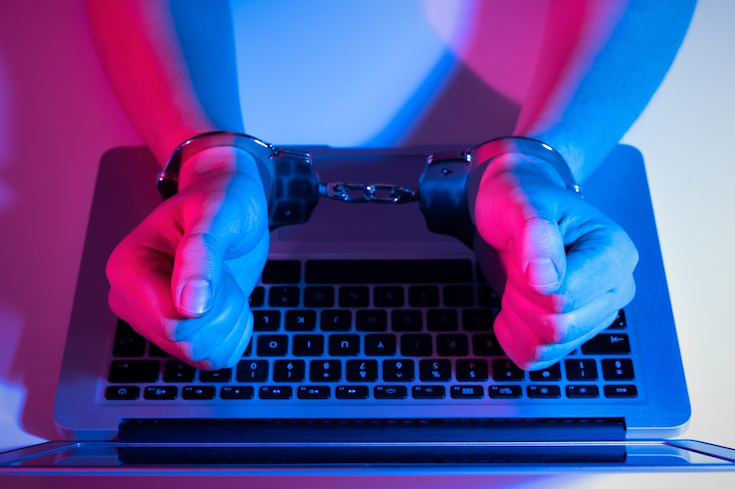
Russia to Rent Tech-Savvy Prisoners to Corporate IT?

Image: Proxima Studios, via Shutterstock.

Faced with a brain drain of smart people fleeing the country following its invasion of Ukraine, the Russian Federation is floating a new strategy to address a worsening shortage of qualified information technology experts: Forcing tech-savvy people within the nation’s prison population to perform low-cost IT work for domestic companies.

Multiple Russian news outlets published stories on April 27 saying the Russian Federal Penitentiary Service had announced a plan to recruit IT specialists from Russian prisons to work remotely for domestic commercial companies.

Russians sentenced to forced labor will serve out their time at one of many correctional centers across dozens of Russian regions, usually at the center that is closest to their hometown. Alexander Khabarov, deputy head of Russia’s penitentiary service, said his agency had received proposals from businessmen in different regions to involve IT specialists serving sentences in correctional centers to work remotely for commercial companies.

Khabarov told Russian media outlets that under the proposal people with IT skills at these facilities would labor only in IT-related roles, but would not be limited to working with companies in their own region.

“We are approached with this initiative in a number of territories, in a number of subjects by entrepreneurs who work in this area,” Khabarov told Russian state media organization TASS. “We are only at the initial stage. If this is in demand, and this is most likely in demand, we think that we will not force specialists in this field to work in some other industries.”

According to Russian media site Lenta.ru, since March 21 nearly 95,000 vacancies in IT have remained unfilled in Russia. Lenta says the number unfilled job slots actually shrank 25 percent from the previous month, officially because “many Russian companies are currently reviewing their plans and budgets, and some projects have been postponed.” The story fails to even mention the recent economic sanctions that are currently affecting many Russian companies thanks to Russia’s invasion of Ukraine in late February.

The Russian Association for Electronic Communications (RAEC) estimated recently that between 70,000 and 100,000 people will leave Russia as part of the second wave of emigration of IT specialists from Russia. “The study also notes that the number of IT people who want to leave Russia is growing. Experts consider the USA, Germany, Georgia, Cyprus and Canada to be the most attractive countries for moving,” Lenta reported of the RAEC survey.

It’s not clear how many “IT specialists” are currently serving prison time in Russia, or precisely what that might mean in terms of an inmate’s IT skills and knowledge. According to the BCC, about half of the world’s prison population is held in the United States, Russia or China. The BCC says Russia currently houses nearly 875,000 inmates, or about 615 inmates for every 100,000 citizens. The United States has an even higher incarceration rate (737/100,000), but also a far larger total prison population of nearly 2.2 million.

Sergei Boyarsky, deputy chairman of the Russian Duma’s Committee on Information Policy, said the idea was worth pursuing if indeed there are a significant number of IT specialists who are already incarcerated in Russia.

“I know that we have a need in general for IT specialists, this is a growing market,” said Boyarsky, who was among the Russian leaders sanctioned by the United States Treasury on Marc. 24, 2022 in response to the Russian invasion of Ukraine. Boyarsky is head of the St. Petersburg branch of United Russia, a strongly pro-Putin political party that holds more than 70 percent of the seats in the Russian State Duma.

“Since they still work there, it would probably be right to give people with a profession that allows them to work remotely not to lose their qualifications,” Boyarsky was quoted as saying of potentially qualified inmates. “At a minimum, this proposal is worth attention and discussion if there are a lot of such specialists.”

According to Russia’s penitentiary service, the average salary of those sentenced to forced labor is about 20,000 rubles per month, or approximately USD $281. Russian news outlet RBC reports that businesses started using prison labor after the possibility of creating correctional centers in organizations appeared in 2020. RBC notes that Russia now has 117 such centers across 76 Russian regions.

—————
Free Secure Email – Transcom Sigma
Boost Inflight Internet
Transcom Hosting
Transcom Premium Domains