New Emergency Fraud Hotline Launched in UK

New Emergency Fraud Hotline Launched in UK

A new emergency fraud hotline has been set up to help tackle surging financial scams in the UK.

UK citizens who believe someone is maybe trying to trick them into handing over money or personal details can now be automatically connected with their bank’s fraud prevention service by dialing 159.

The service will work in a similar way to non-emergency police (101) or NHS (111) inquiries, offering a memorable and secure number to receive help and advice quickly.

Anyone who receives a call or message from someone asking for money to be transferred or any other financial matter is being urged to hang up immediately and dial 159. They will then be connected to their bank’s fraud prevention service to advise them on what to do.

The scheme is being sponsored by Stop Scams UK, a coalition of banking and technology companies. It is initially being run as a 1-year pilot, and if successful, will be made into a universal service.

Currently, the banks involved in the initiative are Barclays, Lloyds (including Halifax and Bank of Scotland), NatWest (including Royal Bank of Scotland and Ulster Bank), Santander and Starling Bank. These banks represent over 70% of UK primary current account holders. TSB will join up in January, and Stop Scams UK is hoping that more will sign up over the course of the pilot.

Most major consumer telephone firms are taking part, and more than 80% of UK mobiles and landlines will be able to use 159 at the outset. It is hoped this will reach 100% during the pilot.

Stop Scams UK also emphasized that 159 “will never call you.”

The BBC quoted Ruth Evans, chair of Stop Scams UK, who stated: “Criminals rely on forcing people into heat-of-the-moment decisions, and calling 159 is a simple, practical tool to break their spell.”

The initiative aims to stem surging fraud cases during the past 18 months. A recent analysis by money.co.uk found that Brits have lost over £1bn to fraud and cybercrime in the first six months of 2021.

Commenting on the news, George Patsis, CEO of Obrela Security Industries, said: “The pandemic created a perfect breeding ground for cybercrime. Not only were people getting more deliveries to their homes, banks were also offering new services to help people cope financially through the pandemic. However, this created a multitude of new avenues for cyber-criminals to thrive, and the latest figures show that they succeeded.

“Today, banking fraud scams are rife, and thousands of people are falling victim to them every day, losing millions of pounds with little information on whom to contact to report attacks. However, this new emergency line will address this issue.

“The government also needs to work with banks so information is clearly communicated about how victims can get their money back, as this is another grey area that leaves many people confused.

“It is also vital that banks continue to educate customers on the techniques fraudsters use to trick people into handing over money and their account details because the more people know about these scams, the less likely they are to fall victim.”

—————
Boost Internet Speed
Free Business Hosting
Free Email Account
Dropcatch
Free Secure Email
Secure Email
Cheap VOIP Calls
Free Hosting
Boost Inflight Wifi
Premium Domains
Free Domains

Half of Regulated Firms See Pandemic Spike in Financial Crime

Half of Regulated Firms See Pandemic Spike in Financial Crime

Around half of firms in the financial services, property and legal sectors have reported rising levels of financial crime over the past 12 months, according to new data from SmartSearch.

The anti-money laundering (AML) specialist polled 500 regulated businesses in the UK to better understand the levels of risk facing players in each vertical.

Overall, 48% of respondents said they’d seen a rise in financial crime, and a quarter (26%) admitted they’d been a victim of attacks.

Legal firms, including conveyancers, experienced the most significant number of compromises, with a third (33%) saying they had been a victim of financial crime.

The sector is an increasingly attractive target for both state-backed and financially motivated cyber-criminals, given the wealth of sensitive client information that legal practices typically hold.

However, while the threat from external actors is certainly acute, separate research earlier this year revealed that most breaches reported to regulator the Information Commissioner’s Office (ICO) come from negligent insiders.

The SmartSearch study also revealed variations across different regions of the UK. For example, almost two-thirds (64%) of regulated businesses in the East Midlands reported a rise in fraud attempts, versus 55% in London.

SmartSearch CEO John Dobson argued that the rush to adapt to new business practices during the pandemic may have exposed some organizations to a rise in financial crime and money laundering.

In particular, crucial Know Your Customer (KYC) checks and other due diligence processes required by AML regulations became harder as face-to-face meetings were banned.

The Money Laundering and Terrorist Finance Act introduced in September gave the green light for firms to streamline these processes via digital verification. Yet 13% of those SmartSearch spoke to aren’t even aware of the changes.

“There’s no doubt the conditions since the outbreak of coronavirus have been ripe for criminals to seize the opportunity for money laundering and other fraudulent activities in the property market,” argued Dobson.

“The message for regulated business that comes out of these findings is that switching to electronic verification is the smart thing to do, providing confidence through automated perpetual KYC processes. If the country is on the brink of another lockdown this winter, it is vital that businesses are not caught out by not having the right tools to avoid business disruption.”

—————
Boost Internet Speed
Free Business Hosting
Free Email Account
Dropcatch
Free Secure Email
Secure Email
Cheap VOIP Calls
Free Hosting
Boost Inflight Wifi
Premium Domains
Free Domains

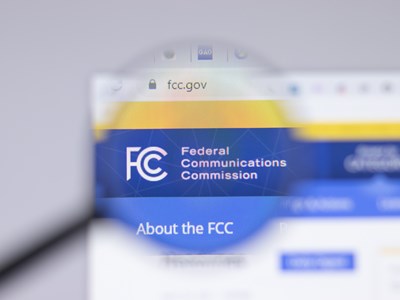
FCC: Applications Open Soon for Huawei/ZTE Replacement Fund

FCC: Applications Open Soon for Huawei/ZTE Replacement Fund

The US telecoms regulator revealed more details on a scheme to reimburse smaller carriers who procured kit from Chinese providers, which was subsequently deemed a national security risk.

The Federal Communications Commission (FCC) officially designated Huawei and ZTE a security risk in July 2020, having first revealed plans to force carriers to rip-and-replace Chinese equipment the previous year.

An update yesterday claimed that small telecoms carriers would be able to apply for a portion of the Secure and Trusted Communications Networks Reimbursement Program from October 29. However, the window for applications will close on January 14 2022.

There’s $1.9bn up for grabs in total, but several rules are attached. First, carriers must serve 10 million or fewer customers, and the equipment in scope is limited to that produced by Huawei and ZTE and purchased before June 30 2020.

The FCC’s Wireline Competition Bureau will assess whether an application is eligible based on the “reasonableness of the cost estimates” provided by the applicant. These must cover the costs for removing, replacing, and disposing of communications equipment and services.

If there’s a problem with applications, the carrier will have 15 days to fix any highlighted issued before it is denied in full.

If older networks can’t be replaced due to the legacy nature of the equipment, they may be replaced by 5G/LTE kit.

Huawei and ZTE’s fortunes have taken a tumble since the US singled the firms out for special treatment. Allies, including the UK, Australia, and New Zealand, have taken steps to ban Huawei’s and ZTE’s equipment from their 5G networks.

In related news, Huawei CFO Meng Wanzhou was released from house arrest in Vancouver over the weekend after striking a plea deal with US prosecutors.

Under the terms of the deal, she admitted misleading a global banking partner about the nature of the firm’s business in Iran and its efforts to evade US sanctions.

—————
Boost Internet Speed
Free Business Hosting
Free Email Account
Dropcatch
Free Secure Email
Secure Email
Cheap VOIP Calls
Free Hosting
Boost Inflight Wifi
Premium Domains
Free Domains

Crypto Developer Pleads Guilty to North Korean Plot

Crypto Developer Pleads Guilty to North Korean Plot

A former Ethereum developer has pleaded guilty to helping North Korea escape US sanctions by providing technical advice on cryptocurrency.

Singapore resident and US citizen Virgil Griffith, 38, conspired to violate the International Emergency Economic Powers Act (IEEPA) on one count, which carries a maximum term of 20 years in prison.

According to the Department of Justice (DoJ), he began developing and funding cryptocurrency infrastructure in the hermit nation as far back as 2018, knowing that the spoils from mining digital coins could help the country evade sanctions and fund its nuclear weapons program.

In April the following year, he’s said to have given a presentation in Pyongyang, along with several unnamed co-conspirators, in which he explained how cryptocurrency could be used to evade sanctions and how smart contracts could be used in weapons negotiations with the US. This is despite the State Department denying Griffith permission to travel to the North Korean capital.

He’s also said to have attempted to recruit other US citizens to join his scheme. However, during this period, no attempt was made to contact the Treasury’s Office of Foreign Assets Control (OFAC) to request a license for exporting goods, services or technology to North Korea.

Griffith initially pleaded not guilty back in January 2020, following his arrest at Los Angeles International Airport in November 2019.

It emerged in August this year that four unauthorized FBI staffers were able to view data that had been extracted from Griffith’s Twitter and Facebook accounts due to a bug in the Palantir analytics software they were using.

However, it doesn’t seem to have had any bearing on the investigation or the criminal case against the developer.

“As he admitted in court today, Virgil Griffith agreed to help one of our nation’s most dangerous foreign adversaries, North Korea. Griffith worked with others to provide cryptocurrency services to North Korea and assist North Korea in evading sanctions, and traveled to North Korea to do so,” said US attorney Audrey Strauss.

“In the process, Griffith jeopardized the national security of the United States by undermining the sanctions that both Congress and the President have enacted to place maximum pressure on the threat posed by North Korea’s treacherous regime.”

—————
Boost Internet Speed
Free Business Hosting
Free Email Account
Dropcatch
Free Secure Email
Secure Email
Cheap VOIP Calls
Free Hosting
Boost Inflight Wifi
Premium Domains
Free Domains

Computer Scientist Jailed Over Dark Web Conspiracy

Computer Scientist Jailed Over Dark Web Conspiracy

A computer scientist has been charged with using computers belonging to the California Department of Technology for illegal purposes.

According to the Transparent California online database, Jonathan Patrick Turrentine was employed by the department as a system software specialist as recently as 2016. 

On Wednesday, the 39-year-old was booked into the Sacramento County Main Jail on suspicion of drug trafficking, money laundering and trafficking in counterfeit goods. He is being held without bail.

A 50-page criminal complaint unsealed on Thursday alleges that Turrentine, using screen names including Caliplugmike, sold various contraband items via the dark website Empire Marketplace. 

The complaint states: “As of April 4, 2020, Caliplugmike had 904 reviews on Empire Marketplace, with a customer service score of 97.13% positive market feedback.”

Turrentine is accused of selling “various amounts of LSD, cocaine, Xanax pills, Adderall pills, psilocybin mushroom, ecstasy and herbal products of marijuana in various forms including edibles, vape pens/cartridges and marijuana buds in gram, ounce and pound amounts” alongside compromised emails and passwords. 

An investigation was launched in November 2018 after drug-detecting sniffer dogs flagged a suspicious package that arrived at Royal Oaks post office, addressed to Turrentine.

When law enforcement officers opened the package, they found several thousand apparently fake Xanax pills. Turrentine said he wasn’t expecting a delivery and denied any knowledge of the pills. 

Since Turrentine was on probation after being convicted in 2018 of illegally accessing a computer network to mine Monero, investigators could conduct an immediate search of his room.

A bottle containing 67 tablets that officers described as “identical to the pills that were in the suspicious package” was discovered along with prepaid shipping labels and vacuum bags.

Investigators also observed a computer with an active monitor on, displaying “communications that matched those of an individual operating a darknet vendor site to distribute illegal narcotics.”

Court documents state: “A quick computer search revealed that Turrentine controlled several dark web provider accounts and used the nicknames Mushmike1776, Calicartconnect, Calicarts, Bigboycarts, and Californiabudz.”

Undercover agents tracked Turrentine, using Bitcoin to purchase illegal goods from his alleged dark web accounts, including drugs and a $1 list of 1.4 billion email addresses and passwords.

—————
Boost Internet Speed
Free Business Hosting
Free Email Account
Dropcatch
Free Secure Email
Secure Email
Cheap VOIP Calls
Free Hosting
Boost Inflight Wifi
Premium Domains
Free Domains

Working Exploit Is Out for VMware vCenter CVE-2021-22005 Flaw

UPDATE: Indicators of compromise are now available. The unredacted RCE exploit released on Monday allows unauthenticated, remote attackers to upload files to the vCenter Server analytics service.

—————
Boost Internet Speed
Free Business Hosting
Free Email Account
Dropcatch
Free Secure Email
Secure Email
Cheap VOIP Calls
Free Hosting
Boost Inflight Wifi
Premium Domains
Free Domains