News

Why Take9 Won’t Improve Cybersecurity

There’s a new cybersecurity awareness campaign: Take9. The idea is that people—you, me, everyone—should just pause for nine seconds and think more about the link they are planning to click on, the file they are planning to download, or whatever it is they are planning to share.

There’s a website—of course—and a video, well-produced and scary. But the campaign won’t do much to improve cybersecurity. The advice isn’t reasonable, it won’t make either individuals or nations appreciably safer, and it deflects blame from the real causes of our cyberspace insecurities.

First, the advice is not realistic. A nine-second pause is an eternity in something as routine as using your computer or phone. Try it; use a timer. Then think about how many links you click on and how many things you forward or reply to. Are we pausing for nine seconds after every text message? Every Slack ping? Does the clock reset if someone replies midpause? What about browsing—do we pause before clicking each link, or after every page loads? The logistics quickly become impossible. I doubt they tested the idea on actual users.

Second, it largely won’t help. The industry should know because we tried it a decade ago. “Stop. Think. Connect.” was an awareness campaign from 2016, by the Department of Homeland Security—this was before CISA—and the National Cybersecurity Alliance. The message was basically the same: Stop and think before doing anything online. It didn’t work then, either.

Take9’s website says, “Science says: In stressful situations, wait 10 seconds before responding.” The problem with that is that clicking on a link is not a stressful situation. It’s normal, one that happens hundreds of times a day. Maybe you can train a person to count to 10 before punching someone in a bar but not before opening an attachment.

And there is no basis in science for it. It’s a folk belief, all over the Internet but with no actual research behind it—like the five-second rule when you drop food on the floor. In emotionally charged contexts, most people are already overwhelmed, cognitively taxed, and not functioning in a space where rational interruption works as neatly as this advice suggests.

Pausing Adds Little

Pauses help us break habits. If we are clicking, sharing, linking, downloading, and connecting out of habit, a pause to break that habit works. But the problem here isn’t habit alone. The problem is that people aren’t able to differentiate between something legitimate and an attack.

The Take9 website says that nine seconds is “time enough to make a better decision,” but there’s no use telling people to stop and think if they don’t know what to think about after they’ve stopped. Pause for nine seconds and… do what? Take9 offers no guidance. It presumes people have the cognitive tools to understand the myriad potential attacks and figure out which one of the thousands of Internet actions they take is harmful. If people don’t have the right knowledge, pausing for longer—even a minute—will do nothing to add knowledge.

The three-part suspicion, cognition, and automaticity model (SCAM) is one way to think about this. The first is lack of knowledge—not knowing what’s risky and what isn’t. The second is habits: people doing what they always do. And third, using flawed mental shortcuts, like believing PDFs to be safer than Microsoft Word documents, or that mobile devices are safer than computers for opening suspicious emails.

These pathways don’t always occur in isolation; sometimes they happen together or sequentially. They can influence each other or cancel each other out. For example, a lack of knowledge can lead someone to rely on flawed mental shortcuts, while those same shortcuts can reinforce that lack of knowledge. That’s why meaningful behavioral change requires more than just a pause; it needs cognitive scaffolding and system designs that account for these dynamic interactions.

A successful awareness campaign would do more than tell people to pause. It would guide them through a two-step process. First trigger suspicion, motivating them to look more closely. Then, direct their attention by telling them what to look at and how to evaluate it. When both happen, the person is far more likely to make a better decision.

This means that pauses need to be context specific. Think about email readers that embed warnings like “EXTERNAL: This email is from an address outside your organization” or “You have not received an email from this person before.” Those are specifics, and useful. We could imagine an AI plug-in that warns: “This isn’t how Bruce normally writes.” But of course, there’s an arms race in play; the bad guys will use these systems to figure out how to bypass them.

This is all hard. The old cues aren’t there anymore. Current phishing attacks have evolved from those older Nigerian scams filled with grammar mistakes and typos. Text message, voice, or video scams are even harder to detect. There isn’t enough context in a text message for the system to flag. In voice or video, it’s much harder to trigger suspicion without disrupting the ongoing conversation. And all the false positives, when the system flags a legitimate conversation as a potential scam, work against people’s own intuition. People will just start ignoring their own suspicions, just as most people ignore all sorts of warnings that their computer puts in their way.

Even if we do this all well and correctly, we can’t make people immune to social engineering. Recently, both cyberspace activist Cory Doctorow and security researcher Troy Hunt—two people who you’d expect to be excellent scam detectors—got phished. In both cases, it was just the right message at just the right time.

It’s even worse if you’re a large organization. Security isn’t based on the average employee’s ability to detect a malicious email; it’s based on the worst person’s inability—the weakest link. Even if awareness raises the average, it won’t help enough.

Don’t Place Blame Where It Doesn’t Belong

Finally, all of this is bad public policy. The Take9 campaign tells people that they can stop cyberattacks by taking a pause and making a better decision. What’s not said, but certainly implied, is that if they don’t take that pause and don’t make those better decisions, then they’re to blame when the attack occurs.

That’s simply not true, and its blame-the-user message is one of the worst mistakes our industry makes. Stop trying to fix the user. It’s not the user’s fault if they click on a link and it infects their system. It’s not their fault if they plug in a strange USB drive or ignore a warning message that they can’t understand. It’s not even their fault if they get fooled by a look-alike bank website and lose their money. The problem is that we’ve designed these systems to be so insecure that regular, nontechnical people can’t use them with confidence. We’re using security awareness campaigns to cover up bad system design. Or, as security researcher Angela Sasse first said in 1999: “Users are not the enemy.”

We wouldn’t accept that in other parts of our lives. Imagine Take9 in other contexts. Food service: “Before sitting down at a restaurant, take nine seconds: Look in the kitchen, maybe check the temperature of the cooler, or if the cooks’ hands are clean.” Aviation: “Before boarding a plane, take nine seconds: Look at the engine and cockpit, glance at the plane’s maintenance log, ask the pilots if they feel rested.” This is obviously ridiculous advice. The average person doesn’t have the training or expertise to evaluate restaurant or aircraft safety—and we don’t expect them to. We have laws and regulations in place that allow people to eat at a restaurant or board a plane without worry.

But—we get it—the government isn’t going to step in and regulate the Internet. These insecure systems are what we have. Security awareness training, and the blame-the-user mentality that comes with it, are all we have. So if we want meaningful behavioral change, it needs a lot more than just a pause. It needs cognitive scaffolding and system designs that account for all the dynamic interactions that go into a decision to click, download, or share. And that takes real work—more work than just an ad campaign and a slick video.

This essay was written with Arun Vishwanath, and originally appeared in Dark Reading.

—————
Free Secure Email – Transcom Sigma
Boost Inflight Internet
Transcom Hosting
Transcom Premium Domains

Location Tracking App for Foreigners in Moscow

Russia is proposing a rule that all foreigners in Moscow install a tracking app on their phones.

Using a mobile application that all foreigners will have to install on their smartphones, the Russian state will receive the following information:

  • Residence location
  • Fingerprint
  • Face photograph
  • Real-time geo-location monitoring

This isn’t the first time we’ve seen this. Qatar did it in 2022 around the World Cup:

“After accepting the terms of these apps, moderators will have complete control of users’ devices,” he continued. “All personal content, the ability to edit it, share it, extract it as well as data from other apps on your device is in their hands. Moderators will even have the power to unlock users’ devices remotely.”

—————
Free Secure Email – Transcom Sigma
Boost Inflight Internet
Transcom Hosting
Transcom Premium Domains
Chinese-Owned VPNs

One one my biggest worries about VPNs is the amount of trust users need to place in them, and how opaque most of them are about who owns them and what sorts of data they retain.

A new study found that many commercials VPNS are (often surreptitiously) owned by Chinese companies.

It would be hard for U.S. users to avoid the Chinese VPNs. The ownership of many appeared deliberately opaque, with several concealing their structure behind layers of offshore shell companies. TTP was able to determine the Chinese ownership of the 20 VPN apps being offered to Apple’s U.S. users by piecing together corporate documents from around the world. None of those apps clearly disclosed their Chinese ownership.

—————
Free Secure Email – Transcom Sigma
Boost Inflight Internet
Transcom Hosting
Transcom Premium Domains

Friday Squid Blogging: US Naval Ship Attacked by Squid in 1978

Interesting story:

USS Stein was underway when her anti-submarine sonar gear suddenly stopped working. On returning to port and putting the ship in a drydock, engineers observed many deep scratches in the sonar dome’s rubber “NOFOUL” coating. In some areas, the coating was described as being shredded, with rips up to four feet long. Large claws were left embedded at the bottom of most of the scratches.

As usual, you can also use this squid post to talk about the security stories in the news that I haven’t covered.

—————
Free Secure Email – Transcom Sigma
Boost Inflight Internet
Transcom Hosting
Transcom Premium Domains
U.S. Sanctions Cloud Provider ‘Funnull’ as Top Source of ‘Pig Butchering’ Scams

Image: Shutterstock, ArtHead.

The U.S. government today imposed economic sanctions on Funnull Technology Inc., a Philippines-based company that provides computer infrastructure for hundreds of thousands of websites involved in virtual currency investment scams known as “pig butchering.” In January 2025, KrebsOnSecurity detailed how Funnull was being used as a content delivery network that catered to cybercriminals seeking to route their traffic through U.S.-based cloud providers.

“Americans lose billions of dollars annually to these cyber scams, with revenues generated from these crimes rising to record levels in 2024,” reads a statement from the U.S. Department of the Treasury, which sanctioned Funnull and its 40-year-old Chinese administrator Liu Lizhi. “Funnull has directly facilitated several of these schemes, resulting in over $200 million in U.S. victim-reported losses.”

The Treasury Department said Funnull’s operations are linked to the majority of virtual currency investment scam websites reported to the FBI. The agency said Funnull directly facilitated pig butchering and other schemes that resulted in more than $200 million in financial losses by Americans.

Pig butchering is a rampant form of fraud wherein people are lured by flirtatious strangers online into investing in fraudulent cryptocurrency trading platforms. Victims are coached to invest more and more money into what appears to be an extremely profitable trading platform, only to find their money is gone when they wish to cash out.

The scammers often insist that investors pay additional “taxes” on their crypto “earnings” before they can see their invested funds again (spoiler: they never do), and a shocking number of people have lost six figures or more through these pig butchering scams.

KrebsOnSecurity’s January story on Funnull was based on research from the security firm Silent Push, which discovered in October 2024 that a vast number of domains hosted via Funnull were promoting gambling sites that bore the logo of the Suncity Group, a Chinese entity named in a 2024 UN report (PDF) for laundering millions of dollars for the North Korean state-sponsored hacking group Lazarus.

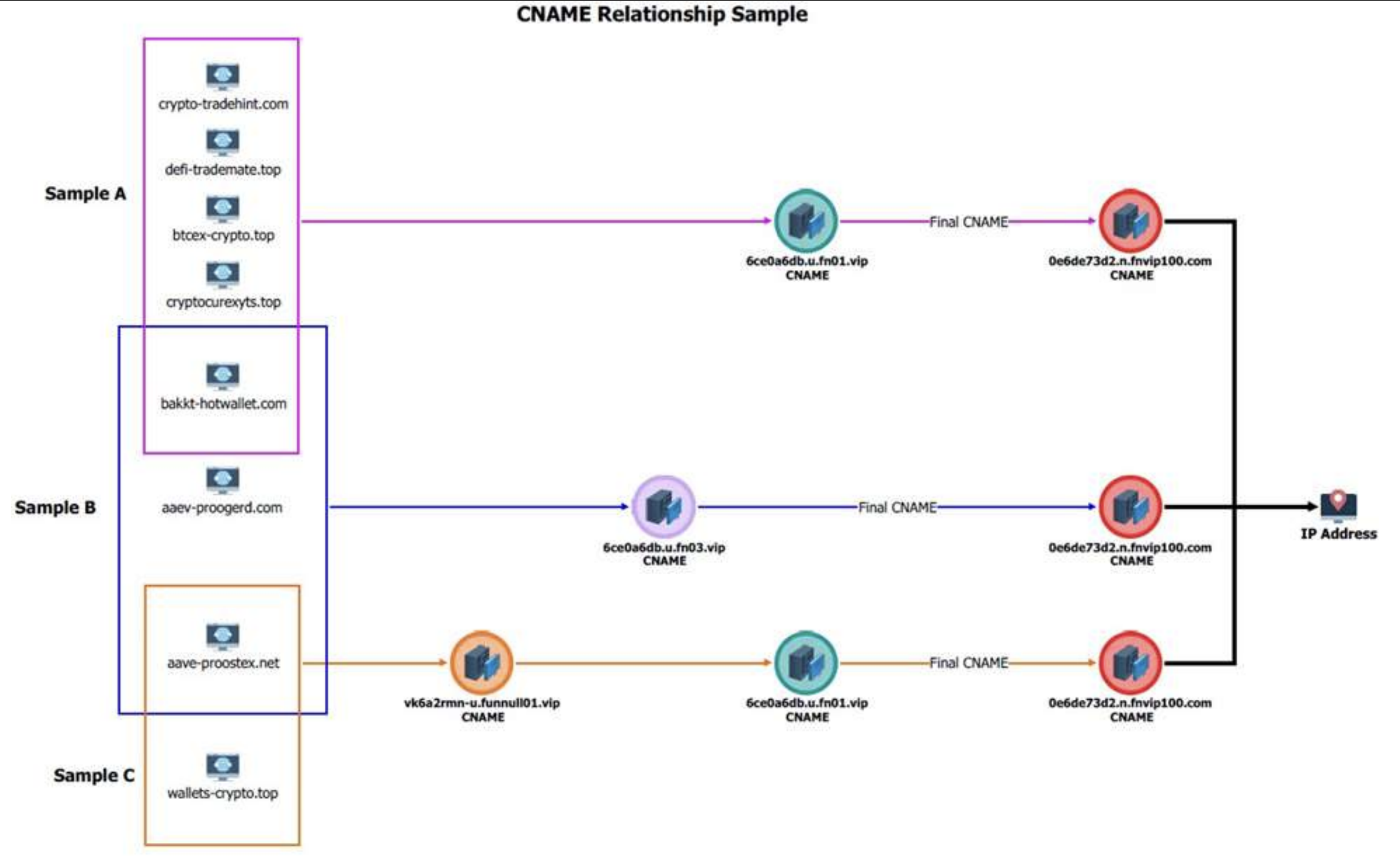
Silent Push found Funnull was a criminal content delivery network (CDN) that carried a great deal of traffic tied to scam websites, funneling the traffic through a dizzying chain of auto-generated domain names and U.S.-based cloud providers before redirecting to malicious or phishous websites. The FBI has released a technical writeup (PDF) of the infrastructure used to manage the malicious Funnull domains between October 2023 and April 2025.

A graphic from the FBI explaining how Funnull generated a slew of new domains on a regular basis and mapped them to Internet addresses on U.S. cloud providers.

Silent Push revisited Funnull’s infrastructure in January 2025 and found Funnull was still using many of the same Amazon and Microsoft cloud Internet addresses identified as malicious in its October report. Both Amazon and Microsoft pledged to rid their networks of Funnull’s presence following that story, but according to Silent Push’s Zach Edwards only one of those companies has followed through.

Edwards said Silent Push no longer sees Microsoft Internet addresses showing up in Funnull’s infrastructure, while Amazon continues to struggle with removing Funnull servers, including one that appears to have first materialized in 2023.

“Amazon is doing a terrible job — every day since they made those claims to you and us in our public blog they have had IPs still mapped to Funnull, including some that have stayed mapped for inexplicable periods of time,” Edwards said.

Amazon said its Amazon Web Services (AWS) hosting platform actively counters abuse attempts.

“We have stopped hundreds of attempts this year related to this group and we are looking into the information you shared earlier today,” reads a statement shared by Amazon. “If anyone suspects that AWS resources are being used for abusive activity, they can report it to AWS Trust & Safety using the report abuse form here.”

U.S. based cloud providers remain an attractive home base for cybercriminal organizations because many organizations will not be overly aggressive in blocking traffic from U.S.-based cloud networks, as doing so can result in blocking access to many legitimate web destinations that are also on that same shared network segment or host.

What’s more, funneling their bad traffic so that it appears to be coming out of U.S. cloud Internet providers allows cybercriminals to connect to websites from web addresses that are geographically close(r) to their targets and victims (to sidestep location-based security controls by your bank, for example).

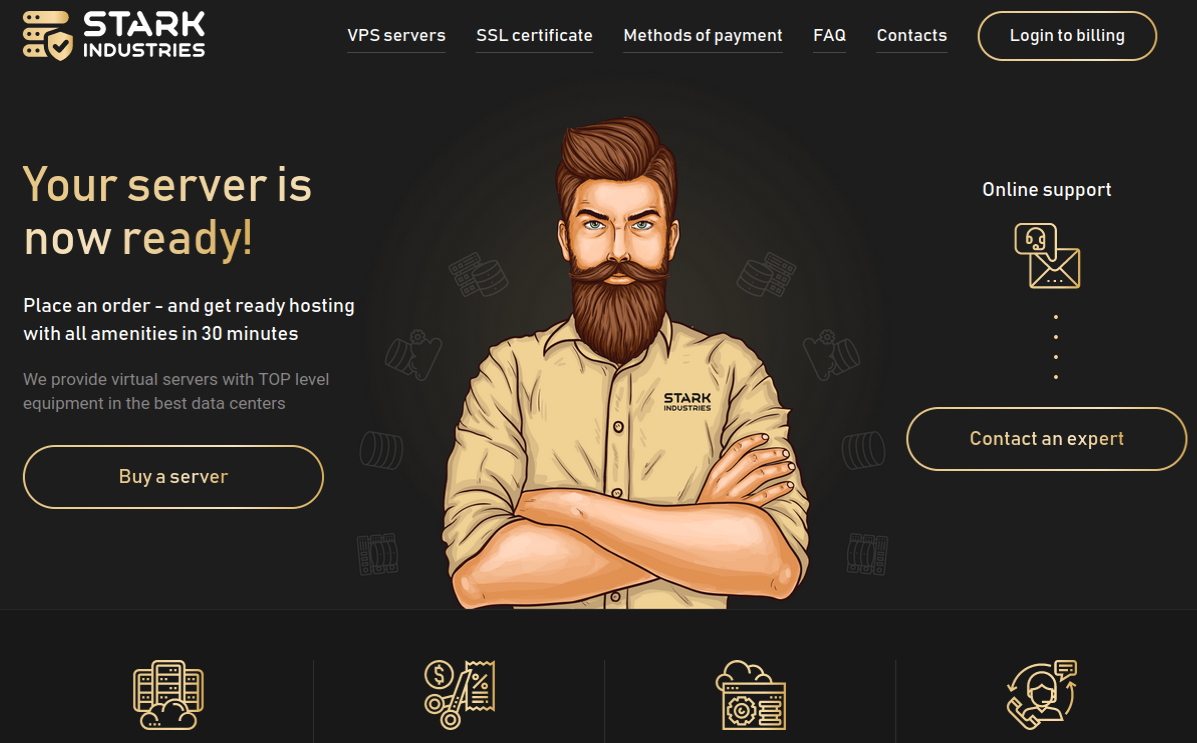
Funnull is not the only cybercriminal infrastructure-as-a-service provider that was sanctioned this month: On May 20, 2025, the European Union imposed sanctions on Stark Industries Solutions, an ISP that materialized at the start of Russia’s invasion of Ukraine and has been used as a global proxy network that conceals the true source of cyberattacks and disinformation campaigns against enemies of Russia.

In May 2024, KrebsOnSecurity published a deep dive on Stark Industries Solutions that found much of the malicious traffic traversing Stark’s network (e.g. vulnerability scanning and password brute force attacks) was being bounced through U.S.-based cloud providers. My reporting showed how deeply Stark had penetrated U.S. ISPs, and that Ivan Neculiti for many years sold “bulletproof” hosting services that told Russian cybercrime forum customers they would proudly ignore any abuse complaints or police inquiries.

The homepage of Stark Industries Solutions.

That story examined the history of Stark’s co-founders, Moldovan brothers Ivan and Yuri Neculiti, who each denied past involvement in cybercrime or any current involvement in assisting Russian disinformation efforts or cyberattacks. Nevertheless, the EU sanctioned both brothers as well.

The EU said Stark and the Neculti brothers “enabled various Russian state-sponsored and state-affiliated actors to conduct destabilising activities including coordinated information manipulation and interference and cyber-attacks against the Union and third countries by providing services intended to hide these activities from European law enforcement and security agencies.”

—————
Free Secure Email – Transcom Sigma
Boost Inflight Internet
Transcom Hosting
Transcom Premium Domains
Pakistan Arrests 21 in ‘Heartsender’ Malware Service

Authorities in Pakistan have arrested 21 individuals accused of operating “Heartsender,” a once popular spam and malware dissemination service that operated for more than a decade. The main clientele for HeartSender were organized crime groups that tried to trick victim companies into making payments to a third party, and its alleged proprietors were publicly identified by KrebsOnSecurity in 2021 after they inadvertently infected their computers with malware.

Some of the core developers and sellers of Heartsender posing at a work outing in 2021. WeCodeSolutions boss Rameez Shahzad (in sunglasses) is in the center of this group photo, which was posted by employee Burhan Ul Haq, pictured just to the right of Shahzad.

A report from the Pakistani media outlet Dawn states that authorities there arrested 21 people alleged to have operated Heartsender, a spam delivery service whose homepage openly advertised phishing kits targeting users of various Internet companies, including Microsoft 365, Yahoo, AOL, Intuit, iCloud and ID.me. Pakistan’s National Cyber Crime Investigation Agency (NCCIA) reportedly conducted raids in Lahore’s Bahria Town and Multan on May 15 and 16.

The NCCIA told reporters the group’s tools were connected to more than $50m in losses in the United States alone, with European authorities investigating 63 additional cases.

“This wasn’t just a scam operation – it was essentially a cybercrime university that empowered fraudsters globally,” NCCIA Director Abdul Ghaffar said at a press briefing.

In January 2025, the FBI and the Dutch Police seized the technical infrastructure for the cybercrime service, which was marketed under the brands Heartsender, Fudpage and Fudtools (and many other “fud” variations). The “fud” bit stands for “Fully Un-Detectable,” and it refers to cybercrime resources that will evade detection by security tools like antivirus software or anti-spam appliances.

The FBI says transnational organized crime groups that purchased these services primarily used them to run business email compromise (BEC) schemes, wherein the cybercrime actors tricked victim companies into making payments to a third party.

Dawn reported that those arrested included Rameez Shahzad, the alleged ringleader of the Heartsender cybercrime business, which most recently operated under the Pakistani front company WeCodeSolutions. Mr. Shahzad was named and pictured in a 2021 KrebsOnSecurity story about a series of remarkable operational security mistakes that exposed their identities and Facebook pages showing employees posing for group photos and socializing at work-related outings.

Prior to folding their operations behind WeCodeSolutions, Shahzad and others arrested this month operated as a web hosting group calling itself The Manipulaters. KrebsOnSecurity first wrote about The Manipulaters in May 2015, mainly because their ads at the time were blanketing a number of popular cybercrime forums, and because they were fairly open and brazen about what they were doing — even who they were in real life.

Sometime in 2019, The Manipulaters failed to renew their core domain name — manipulaters[.]com — the same one tied to so many of the company’s business operations. That domain was quickly scooped up by Scylla Intel, a cyber intelligence firm that specializes in connecting cybercriminals to their real-life identities. Soon after, Scylla started receiving large amounts of email correspondence intended for the group’s owners.

In 2024, DomainTools.com found the web-hosted version of Heartsender leaked an extraordinary amount of user information to unauthenticated users, including customer credentials and email records from Heartsender employees. DomainTools says the malware infections on Manipulaters PCs exposed “vast swaths of account-related data along with an outline of the group’s membership, operations, and position in the broader underground economy.”

Shahzad allegedly used the alias “Saim Raza,” an identity which has contacted KrebsOnSecurity multiple times over the past decade with demands to remove stories published about the group. The Saim Raza identity most recently contacted this author in November 2024, asserting they had quit the cybercrime industry and turned over a new leaf after a brush with the Pakistani police.

The arrested suspects include Rameez Shahzad, Muhammad Aslam (Rameez’s father), Atif Hussain, Muhammad Umar Irshad, Yasir Ali, Syed Saim Ali Shah, Muhammad Nowsherwan, Burhanul Haq, Adnan Munawar, Abdul Moiz, Hussnain Haider, Bilal Ahmad, Dilbar Hussain, Muhammad Adeel Akram, Awais Rasool, Usama Farooq, Usama Mehmood and Hamad Nawaz.

—————
Free Secure Email – Transcom Sigma
Boost Inflight Internet
Transcom Hosting
Transcom Premium Domains

Oops: DanaBot Malware Devs Infected Their Own PCs

The U.S. government today unsealed criminal charges against 16 individuals accused of operating and selling DanaBot, a prolific strain of information-stealing malware that has been sold on Russian cybercrime forums since 2018. The FBI says a newer version of DanaBot was used for espionage, and that many of the defendants exposed their real-life identities after accidentally infecting their own systems with the malware.

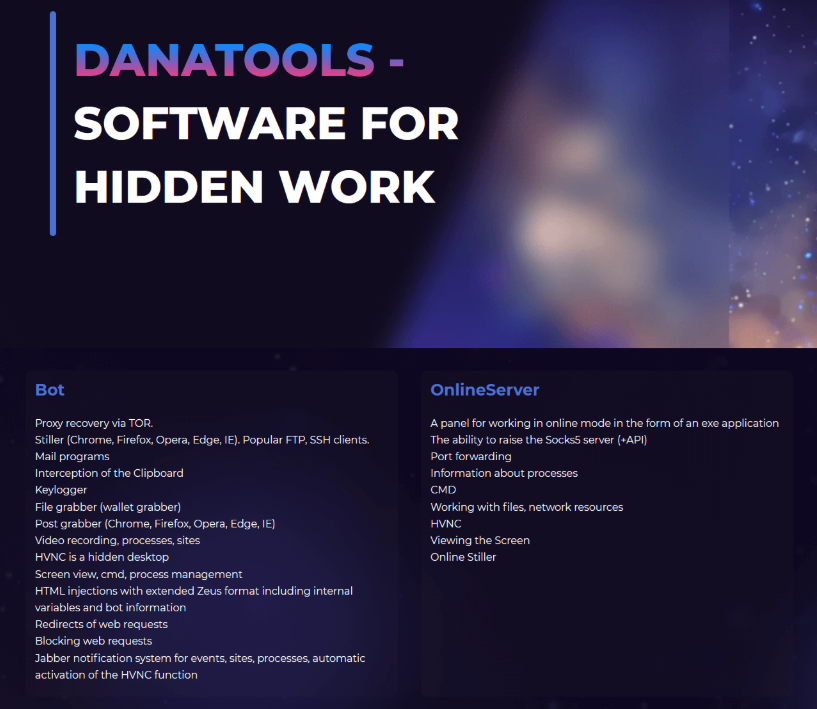
DanaBot’s features, as promoted on its support site. Image: welivesecurity.com.

Initially spotted in May 2018 by researchers at the email security firm Proofpoint, DanaBot is a malware-as-a-service platform that specializes in credential theft and banking fraud.

Today, the U.S. Department of Justice unsealed a criminal complaint and indictment from 2022, which said the FBI identified at least 40 affiliates who were paying between $3,000 and $4,000 a month for access to the information stealer platform.

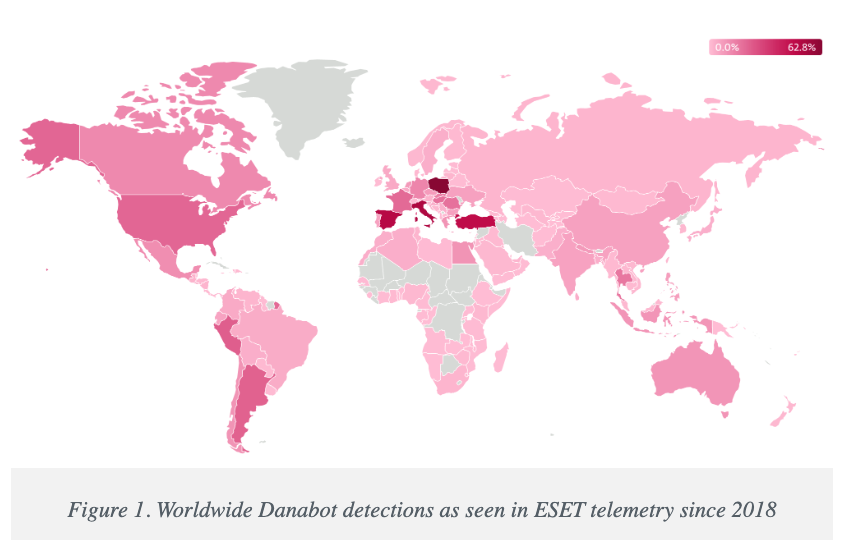
The government says the malware infected more than 300,000 systems globally, causing estimated losses of more than $50 million. The ringleaders of the DanaBot conspiracy are named as Aleksandr Stepanov, 39, a.k.a. “JimmBee,” and Artem Aleksandrovich Kalinkin, 34, a.k.a. “Onix”, both of Novosibirsk, Russia. Kalinkin is an IT engineer for the Russian state-owned energy giant Gazprom. His Facebook profile name is “Maffiozi.”

According to the FBI, there were at least two major versions of DanaBot; the first was sold between 2018 and June 2020, when the malware stopped being offered on Russian cybercrime forums. The government alleges that the second version of DanaBot — emerging in January 2021 — was provided to co-conspirators for use in targeting military, diplomatic and non-governmental organization computers in several countries, including the United States, Belarus, the United Kingdom, Germany, and Russia.

“Unindicted co-conspirators would use the Espionage Variant to compromise computers around the world and steal sensitive diplomatic communications, credentials, and other data from these targeted victims,” reads a grand jury indictment dated Sept. 20, 2022. “This stolen data included financial transactions by diplomatic staff, correspondence concerning day-to-day diplomatic activity, as well as summaries of a particular country’s interactions with the United States.”

The indictment says the FBI in 2022 seized servers used by the DanaBot authors to control their malware, as well as the servers that stored stolen victim data. The government said the server data also show numerous instances in which the DanaBot defendants infected their own PCs, resulting in their credential data being uploaded to stolen data repositories that were seized by the feds.

“In some cases, such self-infections appeared to be deliberately done in order to test, analyze, or improve the malware,” the criminal complaint reads. “In other cases, the infections seemed to be inadvertent – one of the hazards of committing cybercrime is that criminals will sometimes infect themselves with their own malware by mistake.”

Image: welivesecurity.com

A statement from the DOJ says that as part of today’s operation, agents with the Defense Criminal Investigative Service (DCIS) seized the Danabot control servers, including dozens of virtual servers hosted in the United States. The government says it is now working with industry partners to notify DanaBot victims and help remediate infections. The statement credits a number of security firms with providing assistance to the government, including ESET, Flashpoint, Google, Intel 471, Lumen, PayPal, Proofpoint, Team CYRMU, and ZScaler.

It’s not unheard of for financially-oriented malicious software to be repurposed for espionage. A variant of the ZeuS Trojan, which was used in countless online banking attacks against companies in the United States and Europe between 2007 and at least 2015, was for a time diverted to espionage tasks by its author.

As detailed in this 2015 story, the author of the ZeuS trojan created a custom version of the malware to serve purely as a spying machine, which scoured infected systems in Ukraine for specific keywords in emails and documents that would likely only be found in classified documents.

The public charging of the 16 DanaBot defendants comes a day after Microsoft joined a slew of tech companies in disrupting the IT infrastructure for another malware-as-a-service offering — Lumma Stealer, which is likewise offered to affiliates under tiered subscription prices ranging from $250 to $1,000 per month. Separately, Microsoft filed a civil lawsuit to seize control over 2,300 domain names used by Lumma Stealer and its affiliates.

Further reading:

Danabot: Analyzing a Fallen Empire

ZScaler blog: DanaBot Launches DDoS Attack Against the Ukrainian Ministry of Defense

Flashpoint: Operation Endgame DanaBot Malware

March 2022 criminal complaint v. Artem Aleksandrovich Kalinkin

September 2022 grand jury indictment naming the 16 defendants

—————
Free Secure Email – Transcom Sigma
Boost Inflight Internet
Transcom Hosting
Transcom Premium Domains