News

How to Recognize an Online Scammer

Online scams are evolving faster than ever, with cybercriminals using AI, deepfake technology, and social engineering to trick unsuspecting users.

In the past year, Americans have been targeted by an average of 14 scam messages per day, and deepfake scams have surged 1,740% in North America, according to McAfee’s State of the Scamiverse report. 

These scams go beyond simple phishing emails—scammers now impersonate trusted companies, friends, and even loved ones, making it critical to recognize the warning signs before falling victim.

Here’s how you can spot an online scam and protect yourself: 


5 tips to help you recognize an online scam

Scams are scary, but you can prevent yourself from falling for one by knowing what to look for. Here are a few tell-tale signs that you’re dealing with a scammer.  

They say you’ve won a huge prize

If you get a message that you’ve won a big sum of cash in a sweepstakes you don’t remember entering, it’s a scam. Scammers may tell you that all you need to do to claim your prize is send them a small fee or give them your banking information.  

When you enter a real sweepstakes or lottery, it’s generally up to you to contact the organizer to claim your prize. Sweepstakes aren’t likely to chase you down to give you money.  

They want you to pay in a certain way

Scammers will often ask you to pay them using gift cards, money orders, cryptocurrency (like Bitcoin), or through a particular money transfer service. Scammers need payments in forms that don’t give consumers protection.  

Gift card payments, for example, are typically not reversible and hard to trace. Legitimate organizations will rarely, if ever, ask you to pay using a specific method, especially gift cards 

When you have to make online payments, it’s a good idea to use a secure service like PayPal. Secure payment systems can have features to keep you safe, like end-to-end encryption.  

They say it’s an emergency

Scammers may try to make you panic by saying you owe money to a government agency and you need to pay them immediately to avoid being arrested. Or the criminal might try to tug at your heartstrings by pretending to be a family member in danger who needs money.  

Criminals want you to pay them or give them your information quickly — before you have a chance to think about it. If someone tries to tell you to pay them immediately in a text message, phone call, or email, they’re likely a scammer 

They say they’re from a government organization or company

Many scammers pretend to be part of government organizations like the Internal Revenue Service (IRS). They’ll claim you owe them money. Criminals can even use technology to make their phone numbers appear legitimate on your caller ID.  

If someone claiming to be part of a government organization contacts you, go to that organization’s official site and find an official support number or email. Contact them to verify the information in the initial message.  

Scammers may also pretend to be businesses, like your utility company. They’ll likely say something to scare you, like your gas will be turned off if you don’t pay them right away. 

The email is littered with grammatical errors

Most legitimate organizations will thoroughly proofread any copy or information they send to consumers. Professional emails are well-written, clear, and error-free. On the other hand, scam emails will likely be full of grammar, spelling, and punctuation errors.  

It might surprise you to know that scammers write sloppy emails on purpose. The idea is that if the reader is attentive enough to spot the grammatical mistakes, they likely won’t fall for the scam 

8 most common online scams to watch out for

There are certain scams that criminals try repeatedly because they’ve worked on so many people. Here are a few of the most common scams you should watch out for.  

Phishing scams

A phishing scam can be a phone or email scam. The criminal sends a message in which they pretend to represent an organization you know. It directs you to a fraud website that collects your sensitive information, like your passwords, Social Security number (SSN), and bank account data. Once the scammer has your personal information, they can use it for personal gain.  

Phishing emails may try anything to get you to click on their fake link. They might claim to be your bank and ask you to log into your account to verify some suspicious activity. Or they could pretend to be a sweepstakes and say you need to fill out a form to claim a large reward.  

During the coronavirus pandemic, new phishing scams have emerged, with scammers claiming to be part of various charities and nonprofits. Sites like Charity Navigator can help you discern real groups from fake ones.  

Travel insurance scams

These scams also became much more prominent during the pandemic. Let’s say you’re preparing to fly to Paris with your family. A scammer sends you a message offering you an insurance policy on any travel plans you might be making. They’ll claim the policy will compensate you if your travel plans fall through for any reason without any extra charges.  

You think it might be a good idea to purchase this type of insurance. Right before leaving for your trip, you have to cancel your plans. You go to collect your insurance money only to realize the insurance company doesn’t exist.  

Real travel insurance from a licensed business generally won’t cover foreseeable events (like travel advisories, government turmoil, or pandemics) unless you buy a Cancel for Any Reason (CFAR) addendum for your policy.  

Grandparent scams

Grandparent scams prey on your instinct to protect your family. The scammer will call or send an email pretending to be a family member in some sort of emergency who needs you to wire them money. The scammer may beg you to act right away and avoid sharing their situation with any other family members. 

For example, the scammer might call and say they’re your grandchild who’s been arrested in Mexico and needs money to pay bail. They’ll say they’re in danger and need you to send funds now to save them.  

If you get a call or an email from an alleged family member requesting money, take the time to make sure they’re actually who they say they are. Never wire transfer money right away or over the phone. Ask them a question that only the family member would know and verify their story with the rest of your family.  

Advance fee scam

You get an email from a prince. They’ve recently inherited a huge fortune from a member of their royal family. Now, the prince needs to keep their money in an American bank account to keep it safe. If you let them store their money in your bank account, you’ll be handsomely rewarded. You just need to send them a small fee to get the money.  

There are several versions of this scam, but the prince iteration is a pretty common one. If you get these types of emails, don’t respond or give out your financial information.  

Tech support scams

Your online experience is rudely interrupted when a pop-up appears telling you there’s a huge virus on your computer. You need to “act fast” and contact the support phone number on the screen. If you don’t, all of your important data will be erased.  

When you call the number, a fake tech support worker asks you for remote access to your device to “fix” the problem. If you give the scammer access to your device, they may steal your personal and financial information or install malware. Worse yet, they’ll probably charge you for it.  

These scams can be pretty elaborate. A scam pop-up may even appear to be from a reputable software company. If you see this type of pop-up, don’t respond to it. Instead, try restarting or turning off your device. If the device doesn’t start back up, search for the support number for the device manufacturer and contact them directly.  

Formjacking and retail scams

Scammers will often pose as popular e-commerce companies by creating fake websites. The fake webpages might offer huge deals on social media. They’ll also likely have a URL close to the real business’s URL but slightly different. 

Sometimes, a criminal is skilled enough to hack the website of a large online retailer. When a scammer infiltrates a retailer’s website, they can redirect where the links on that site lead. This is called formjacking.  

For example, you might go to an e-commerce store to buy a jacket. You find the jacket and put it in your online shopping cart. You click “check out,” and you’re taken to a form that collects your credit card information. What you don’t know is that the checkout form is fake. Your credit card number is going directly to the scammers 

Whenever you’re redirected from a website to make a payment or enter in information, always check the URL. If the form is legitimate, it will have the same URL as the site you were on. A fake form will have a URL that’s close to but not exactly the same as the original site. 

Scareware scams (fake antivirus)

These scams are similar to tech support scams. However, instead of urging you to speak directly with a fake tech support person, their goal is to get you to download a fake antivirus software product (scareware).  

You’ll see a pop-up that says your computer has a virus, malware, or some other problem. The only way to get rid of the problem is to install the security software the pop-up links to. You think you’re downloading antivirus software that will save your computer.  

What you’re actually downloading is malicious software. There are several types of malware. The program might be ransomware that locks up your information until you pay the scammers or spyware that tracks your online activity.  

To avoid this scam, never download antivirus software from a pop-up. You’ll be much better off visiting the website of a reputable company, like McAfee, to download antivirus software 

Credit repair scams

Dealing with credit card debt can be extremely stressful. Scammers know this and try to capitalize off it. They’ll send emails posing as credit experts and tell you they can help you fix your credit or relieve some of your debt. They might even claim they can hide harmful details on your credit report. 

All you have to do is pay a small fee. Of course, after you pay the fee, the “credit expert” disappears without helping you out with your credit at all. Generally, legitimate debt settlement firms won’t charge you upfront. If a credit relief company charges you a fee upfront, that’s a red flag.  

Before you enter into an agreement with any credit service, check out their reputation. Do an online search on the company to see what you can find. If there’s nothing about the credit repair company online, it’s probably fake.  

What can you do if you get scammed online?

Admitting that you’ve fallen for an online scam can be embarrassing. But reporting a scammer can help stop them from taking advantage of anyone else. If you’ve been the victim of an online scam, try contacting your local police department and filing a report with the Federal Trade Commission (FTC).  

Several other law enforcement organizations handle different types of fraud. Here are a few examples of institutions that can help you report scams 

Discover how McAfee can keep you and your info safe online

Fraudsters shouldn’t stop you from enjoying your time online. Just by learning to spot an online scam, you can greatly strengthen your immunity to cybercrimes 

For an even greater internet experience, you’ll want the right tools to protect yourself online. McAfee+ can help you confidently surf the web by providing all-in-one protection for your personal info and privacy. This includes identity protection — which comes with 24/7 monitoring of your email addresses and bank accounts — and antivirus software to help safeguard your internet connection.  

Get the peace of mind that comes with McAfee having your back. 

The post How to Recognize an Online Scammer appeared first on McAfee Blog.

—————
Free Secure Email – Transcom Sigma
Boost Inflight Internet
Transcom Hosting
Transcom Premium Domains
The Signal Chat Leak and the NSA

US National Security Advisor Mike Waltz, who started the now-infamous group chat coordinating a US attack against the Yemen-based Houthis on March 15, is seemingly now suggesting that the secure messaging service Signal has security vulnerabilities.

“I didn’t see this loser in the group,” Waltz told Fox News about Atlantic editor in chief Jeffrey Goldberg, whom Waltz invited to the chat. “Whether he did it deliberately or it happened in some other technical mean, is something we’re trying to figure out.”

Waltz’s implication that Goldberg may have hacked his way in was followed by a report from CBS News that the US National Security Agency (NSA) had sent out a bulletin to its employees last month warning them about a security “vulnerability” identified in Signal.

The truth, however, is much more interesting. If Signal has vulnerabilities, then China, Russia, and other US adversaries suddenly have a new incentive to discover them. At the same time, the NSA urgently needs to find and fix any vulnerabilities quickly as it can—and similarly, ensure that commercial smartphones are free of backdoors—access points that allow people other than a smartphone’s user to bypass the usual security authentication methods to access the device’s contents.

That is essential for anyone who wants to keep their communications private, which should be all of us.

It’s common knowledge that the NSA’s mission is breaking into and eavesdropping on other countries’ networks. (During President George W. Bush’s administration, the NSA conducted warrantless taps into domestic communications as well—surveillance that several district courts ruled to be illegal before those decisions were later overturned by appeals courts. To this day, many legal experts maintain that the program violated federal privacy protections.) But the organization has a secondary, complementary responsibility: to protect US communications from others who want to spy on them. That is to say: While one part of the NSA is listening into foreign communications, another part is stopping foreigners from doing the same to Americans.

Those missions never contradicted during the Cold War, when allied and enemy communications were wholly separate. Today, though, everyone uses the same computers, the same software, and the same networks. That creates a tension.

When the NSA discovers a technological vulnerability in a service such as Signal (or buys one on the thriving clandestine vulnerability market), does it exploit it in secret, or reveal it so that it can be fixed? Since at least 2014, a US government interagency “equities” process has been used to decide whether it is in the national interest to take advantage of a particular security flaw, or to fix it. The trade-offs are often complicated and hard.

Waltz—along with Vice President J.D. Vance, Defense Secretary Pete Hegseth, and the other officials in the Signal group—have just made the trade-offs much tougher to resolve. Signal is both widely available and widely used. Smaller governments that can’t afford their own military-grade encryption use it. Journalists, human rights workers, persecuted minorities, dissidents, corporate executives, and criminals around the world use it. Many of these populations are of great interest to the NSA.

At the same time, as we have now discovered, the app is being used for operational US military traffic. So, what does the NSA do if it finds a security flaw in Signal?

Previously, it might have preferred to keep the flaw quiet and use it to listen to adversaries. Now, if the agency does that, it risks someone else finding the same vulnerability and using it against the US government. And if it was later disclosed that the NSA could have fixed the problem and didn’t, then the results might be catastrophic for the agency.

Smartphones present a similar trade-off. The biggest risk of eavesdropping on a Signal conversation comes from the individual phones that the app is running on. While it’s largely unclear whether the US officials involved had downloaded the app onto personal or government-issued phones—although Witkoff suggested on X that the program was on his “personal devices“—smartphones are consumer devices, not at all suitable for classified US government conversations. An entire industry of spyware companies sells capabilities to remotely hack smartphones for any country willing to pay. More capable countries have more sophisticated operations. Just last year, attacks that were later attributed to China attempted to access both President Donald Trump and Vance’s smartphones. Previously, the FBI—as well as law enforcement agencies in other countries—have pressured both Apple and Google to add “backdoors” in their phones to more easily facilitate court-authorized eavesdropping.

These backdoors would create, of course, another vulnerability to be exploited. A separate attack from China last year accessed a similar capability built into US telecommunications networks.

The vulnerabilities equities have swung against weakened smartphone security and toward protecting the devices that senior government officials now use to discuss military secrets. That also means that they have swung against the US government hoarding Signal vulnerabilities—and toward full disclosure.

This is plausibly good news for Americans who want to talk among themselves without having anyone, government or otherwise, listen in. We don’t know what pressure the Trump administration is using to make intelligence services fall into line, but it isn’t crazy to worry that the NSA might again start monitoring domestic communications.

Because of the Signal chat leak, it’s less likely that they’ll use vulnerabilities in Signal to do that. Equally, bad actors such as drug cartels may also feel safer using Signal. Their security against the US government lies in the fact that the US government shares their vulnerabilities. No one wants their secrets exposed.

I have long advocated for a “defense dominant” cybersecurity strategy. As long as smartphones are in the pocket of every government official, police officer, judge, CEO, and nuclear power plant operator—and now that they are being used for what the White House now calls calls  “sensitive,” if not outright classified conversations among cabinet members—we need them to be as secure as possible. And that means no government-mandated backdoors.

We may find out more about how officials—including the vice president of the United States—came to be using Signal on what seem to be consumer-grade smartphones, in a apparent breach of the laws on government records. It’s unlikely that they really thought through the consequences of their actions.

Nonetheless, those consequences are real. Other governments, possibly including US allies, will now have much more incentive to break Signal’s security than they did in the past, and more incentive to hack US government smartphones than they did before March 24.

For just the same reason, the US government has urgent incentives to protect them.

This essay was originally published in Foreign Policy.

—————
Free Secure Email – Transcom Sigma
Boost Inflight Internet
Transcom Hosting
Transcom Premium Domains

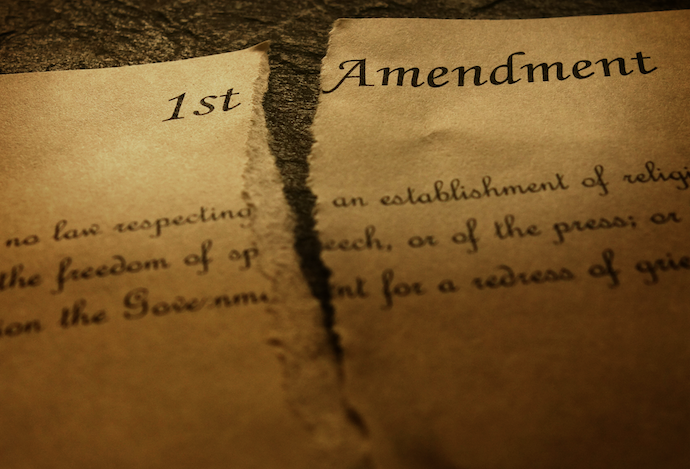
How Each Pillar of the 1st Amendment is Under Attack

“Congress shall make no law respecting an establishment of religion, or prohibiting the free exercise thereof; or abridging the freedom of speech, or of the press; or the right of the people peaceably to assemble, and to petition the Government for a redress of grievances.” -U.S. Constitution, First Amendment.

Image: Shutterstock, zimmytws.

In an address to Congress this month, President Trump claimed he had “brought free speech back to America.” But barely two months into his second term, the president has waged an unprecedented attack on the First Amendment rights of journalists, students, universities, government workers, lawyers and judges.

This story explores a slew of recent actions by the Trump administration that threaten to undermine all five pillars of the First Amendment to the U.S. Constitution, which guarantees freedoms concerning speech, religion, the media, the right to assembly, and the right to petition the government and seek redress for wrongs.

THE RIGHT TO PETITION

The right to petition allows citizens to communicate with the government, whether to complain, request action, or share viewpoints — without fear of reprisal. But that right is being assaulted by this administration on multiple levels. For starters, many GOP lawmakers are now heeding their leadership’s advice to stay away from local town hall meetings and avoid the wrath of constituents affected by the administration’s many federal budget and workforce cuts.

Another example: President Trump recently fired most of the people involved in processing Freedom of Information Act (FOIA) requests for government agencies. FOIA is an indispensable tool used by journalists and the public to request government records, and to hold leaders accountable.

The biggest story by far this week was the bombshell from The Atlantic editor Jeffrey Goldberg, who recounted how he was inadvertently added to a Signal group chat with National Security Advisor Michael Waltz and 16 other Trump administration officials discussing plans for an upcoming attack on Yemen.

One overlooked aspect of Goldberg’s incredible account is that by planning and coordinating the attack on Signal — which features messages that can auto-delete after a short time — administration officials were evidently seeking a way to avoid creating a lasting (and potentially FOIA-able) record of their deliberations.

“Intentional or not, use of Signal in this context was an act of erasure—because without Jeffrey Goldberg being accidentally added to the list, the general public would never have any record of these communications or any way to know they even occurred,” Tony Bradley wrote this week at Forbes.

Petitioning the government, particularly when it ignores your requests, often requires challenging federal agencies in court. But that becomes far more difficult if the most competent law firms start to shy away from cases that may involve crossing the president and his administration.

On March 22, the president issued a memorandum that directs heads of the Justice and Homeland Security Departments to “seek sanctions against attorneys and law firms who engage in frivolous, unreasonable and vexatious litigation against the United States,” or in matters that come before federal agencies.

The POTUS recently issued several executive orders railing against specific law firms with attorneys who worked legal cases against him. On Friday, the president announced that the law firm of Skadden, Arps, Slate, Meager & Flom had agreed to provide $100 million in pro bono work on issues that he supports.

Trump issued another order naming the firm Paul, Weiss, Rifkind, Wharton & Garrison, which ultimately agreed to pledge $40 million in pro bono legal services to the president’s causes.

Other Trump executive orders targeted law firms Jenner & Block and WilmerHale, both of which have attorneys that worked with special counsel Robert Mueller on the investigation into Russian interference in the 2016 election. But this week, two federal judges in separate rulings froze parts of those orders.

“There is no doubt this retaliatory action chills speech and legal advocacy, and that is qualified as a constitutional harm,” wrote Judge Richard Leon, who ruled against the executive order targeting WilmerHale.

President Trump recently took the extraordinary step of calling for the impeachment of federal judges who rule against the administration. Trump called U.S. District Judge James Boasberg a “Radical Left Lunatic” and urged he be removed from office for blocking deportation of Venezuelan alleged gang members under a rarely invoked wartime legal authority.

In a rare public rebuke to a sitting president, U.S. Supreme Court Justice John Roberts issued a statement on March 18 pointing out that “For more than two centuries, it has been established that impeachment is not an appropriate response to disagreement concerning a judicial decision.”

The U.S. Constitution provides that judges can be removed from office only through impeachment by the House of Representatives and conviction by the Senate. The Constitution also states that judges’ salaries cannot be reduced while they are in office.

Undeterred, House Speaker Mike Johnson this week suggested the administration could still use the power of its purse to keep courts in line, and even floated the idea of wholesale eliminating federal courts.

“We do have authority over the federal courts as you know,” Johnson said. “We can eliminate an entire district court. We have power of funding over the courts, and all these other things. But desperate times call for desperate measures, and Congress is going to act, so stay tuned for that.”

FREEDOM OF ASSEMBLY

President Trump has taken a number of actions to discourage lawful demonstrations at universities and colleges across the country, threatening to cut federal funding for any college that supports protests he deems “illegal.”

A Trump executive order in January outlined a broad federal crackdown on what he called “the explosion of antisemitism” on U.S. college campuses. This administration has asserted that foreign students who are lawfully in the United States on visas do not enjoy the same free speech or due process rights as citizens.

Reuters reports that the acting civil rights director at the Department of Education (DOE) on March 10 sent letters to 60 educational institutions warning they could lose federal funding if they don’t do more to combat anti-semitism. On March 20, Trump issued an order calling for the closure of the DOE.

Meanwhile, U.S. Immigration and Customs Enforcement (ICE) agents have been detaining and trying to deport pro-Palestinian students who are legally in the United States. The administration is targeting students and academics who spoke out against Israel’s attacks on Gaza, or who were active in campus protests against U.S. support for the attacks. Secretary of State Marco Rubio told reporters Thursday that at least 300 foreign students have seen their visas revoked under President Trump, a far higher number than was previously known.

In his first term, Trump threatened to use the national guard or the U.S. military to deal with protesters, and in campaigning for re-election he promised to revisit the idea.

“I think the bigger problem is the enemy from within,” Trump told Fox News in October 2024. “We have some very bad people. We have some sick people, radical left lunatics. And I think they’re the big — and it should be very easily handled by, if necessary, by National Guard, or if really necessary, by the military, because they can’t let that happen.”

This term, Trump acted swiftly to remove the top judicial advocates in the armed forces who would almost certainly push back on any request by the president to use U.S. soldiers in an effort to quell public protests, or to arrest and detain immigrants. In late February, the president and Defense Secretary Pete Hegseth fired the top legal officers for the military services — those responsible for ensuring the Uniform Code of Military Justice is followed by commanders.

Military.com warns that the purge “sets an alarming precedent for a crucial job in the military, as President Donald Trump has mused about using the military in unorthodox and potentially illegal ways.” Hegseth told reporters the removals were necessary because he didn’t want them to pose any “roadblocks to orders that are given by a commander in chief.”

FREEDOM OF THE PRESS

President Trump has sued a number of U.S. news outlets, including 60 Minutes, CNN, The Washington Post, The New York Times and other smaller media organizations for unflattering coverage.

In a $10 billion lawsuit against 60 Minutes and its parent Paramount, Trump claims they selectively edited an interview with former Vice President Kamala Harris prior to the 2024 election. The TV news show last month published transcripts of the interview at the heart of the dispute, but Paramount is reportedly considering a settlement to avoid potentially damaging its chances of winning the administration’s approval for a pending multibillion-dollar merger.

The president sued The Des Moines Register and its parent company, Gannett, for publishing a poll showing Trump trailing Harris in the 2024 presidential election in Iowa (a state that went for Trump). The POTUS also is suing the Pulitzer Prize board over 2018 awards given to The New York Times and The Washington Post for their coverage of purported Russian interference in the 2016 election.

Whether or not any of the president’s lawsuits against news organizations have merit or succeed is almost beside the point. The strategy behind suing the media is to make reporters and newsrooms think twice about criticizing or challenging the president and his administration. The president also knows some media outlets will find it more expedient to settle.

Trump also sued ABC News and George Stephanopoulos for stating that the president had been found liable for “rape” in a civil case [Trump was found liable of sexually abusing and defaming E. Jean Carroll]. ABC parent Disney settled that claim by agreeing to donate $15 million to the Trump Presidential Library.

Following the attack on the U.S. Capitol on Jan. 6, 2021, Facebook blocked President Trump’s account. Trump sued Meta, and after the president’s victory in 2024 Meta settled and agreed to pay Trump $25 million: $22 million would go to his presidential library, and the rest to legal fees. Meta CEO Mark Zuckerberg also announced Facebook and Instagram would get rid of fact-checkers and rely instead on reader-submitted “community notes” to debunk disinformation on the social media platform.

Brendan Carr, the president’s pick to run the Federal Communications Commission (FCC), has pledged to “dismantle the censorship cartel and restore free speech rights for everyday Americans.” But on January 22, 2025, the FCC reopened complaints against ABC, CBS and NBC over their coverage of the 2024 election. The previous FCC chair had dismissed the complaints as attacks on the First Amendment and an attempt to weaponize the agency for political purposes.

According to Reuters, the complaints call for an investigation into how ABC News moderated the pre-election TV debate between Trump and Biden, and appearances of then-Vice President Harris on 60 Minutes and on NBC’s “Saturday Night Live.”

Since then, the FCC has opened investigations into NPR and PBS, alleging that they are breaking sponsorship rules. The Center for Democracy & Technology (CDT), a think tank based in Washington, D.C., noted that the FCC is also investigating KCBS in San Francisco for reporting on the location of federal immigration authorities.

“Even if these investigations are ultimately closed without action, the mere fact of opening them – and the implicit threat to the news stations’ license to operate – can have the effect of deterring the press from news coverage that the Administration dislikes,” the CDT’s Kate Ruane observed.

Trump has repeatedly threatened to “open up” libel laws, with the goal of making it easier to sue media organizations for unfavorable coverage. But this week, the U.S. Supreme Court declined to hear a challenge brought by Trump donor and Las Vegas casino magnate Steve Wynn to overturn the landmark 1964 decision in New York Times v. Sullivan, which insulates the press from libel suits over good-faith criticism of public figures.

The president also has insisted on picking which reporters and news outlets should be allowed to cover White House events and participate in the press pool that trails the president. He barred the Associated Press from the White House and Air Force One over their refusal to call the Gulf of Mexico by another name.

And the Defense Department has ordered a number of top media outlets to vacate their spots at the Pentagon, including CNN, The Hill, The Washington Post, The New York Times, NBC News, Politico and National Public Radio.

“Incoming media outlets include the New York Post, Breitbart, the Washington Examiner, the Free Press, the Daily Caller, Newsmax, the Huffington Post and One America News Network, most of whom are seen as conservative or favoring Republican President Donald Trump,” Reuters reported.

FREEDOM OF SPEECH

Shortly after Trump took office again in January 2025, the administration began circulating lists of hundreds of words that government staff and agencies shall not use in their reports and communications.

The Brookings Institution notes that in moving to comply with this anti-speech directive, federal agencies have purged countless taxpayer-funded data sets from a swathe of government websites, including data on crime, sexual orientation, gender, education, climate, and global development.

The New York Times reports that in the past two months, hundreds of terabytes of digital resources analyzing data have been taken off government websites.

“While in many cases the underlying data still exists, the tools that make it possible for the public and researchers to use that data have been removed,” The Times wrote.

On Jan. 27, Trump issued a memo (PDF) that paused all federally funded programs pending a review of those programs for alignment with the administration’s priorities. Among those was ensuring that no funding goes toward advancing “Marxist equity, transgenderism, and green new deal social engineering policies.”

According to the CDT, this order is a blatant attempt to force government grantees to cease engaging in speech that the current administration dislikes, including speech about the benefits of diversity, climate change, and LGBTQ issues.

“The First Amendment does not permit the government to discriminate against grantees because it does not like some of the viewpoints they espouse,” the CDT’s Ruane wrote. “Indeed, those groups that are challenging the constitutionality of the order argued as much in their complaint, and have won an injunction blocking its implementation.”

On January 20, the same day Trump issued an executive order on free speech, the president also issued an executive order titled “Reevaluating and Realigning United States Foreign Aid,” which froze funding for programs run by the U.S. Agency for International Development (USAID). Among those were programs designed to empower civil society and human rights groups, journalists and others responding to digital repression and Internet shutdowns.

According to the Electronic Frontier Foundation (EFF), this includes many freedom technologies that use cryptography, fight censorship, protect freedom of speech, privacy and anonymity for millions of people around the world.

“While the State Department has issued some limited waivers, so far those waivers do not seem to cover the open source internet freedom technologies,” the EFF wrote about the USAID disruptions. “As a result, many of these projects have to stop or severely curtail their work, lay off talented workers, and stop or slow further development.”

On March 14, the president signed another executive order that effectively gutted the U.S. Agency for Global Media (USAGM), which oversees or funds media outlets including Radio Free Europe/Radio Liberty and Voice of America (VOA). The USAGM also oversees Radio Free Asia, which supporters say has been one of the most reliable tools used by the government to combat Chinese propaganda.

But this week, U.S. District Court Judge Royce Lamberth, a Reagan appointee, temporarily blocked USAGM’s closure by the administration.

“RFE/RL has, for decades, operated as one of the organizations that Congress has statutorily designated to carry out this policy,” Lamberth wrote in a 10-page opinion. “The leadership of USAGM cannot, with one sentence of reasoning offering virtually no explanation, force RFE/RL to shut down — even if the President has told them to do so.”

FREEDOM OF RELIGION

The Trump administration rescinded a decades-old policy that instructed officers not to take immigration enforcement actions in or near “sensitive” or “protected” places, such as churches, schools, and hospitals.

That directive was immediately challenged in a case brought by a group of Quakers, Baptists and Sikhs, who argued the policy reversal was keeping people from attending services for fear of being arrested on civil immigration violations. On Feb. 24, a federal judge agreed and blocked ICE agents from entering churches or targeting migrants nearby.

The president’s executive order allegedly addressing antisemitism came with a fact sheet that described college campuses as “infested” with “terrorists” and “jihadists.” Multiple faith groups expressed alarm over the order, saying it attempts to weaponize antisemitism and promote “dehumanizing anti-immigrant policies.

The president also announced the creation of a “Task Force to Eradicate Anti-Christian Bias,” to be led by Attorney General Pam Bondi. Never mind that Christianity is easily the largest faith in America and that Christians are well-represented in Congress.

The Rev. Paul Brandeis Raushenbush, a Baptist minister and head of the progressive Interfaith Alliance, issued a statement accusing Trump of hypocrisy in claiming to champion religion by creating the task force.

“From allowing immigration raids in churches, to targeting faith-based charities, to suppressing religious diversity, the Trump Administration’s aggressive government overreach is infringing on religious freedom in a way we haven’t seen for generations,” Raushenbush said.

A statement from Americans United for Separation of Church and State said the task force could lead to religious persecution of those with other faiths.

“Rather than protecting religious beliefs, this task force will misuse religious freedom to justify bigotry, discrimination, and the subversion of our civil rights laws,” said Rachel Laser, the group’s president and CEO.

Where is President Trump going with all these blatant attacks on the First Amendment? The president has made no secret of his affection for autocratic leaders and “strongmen” around the world, and he is particularly enamored with Hungary’s far-right Prime Minister Viktor Orbán, who has visited Trump’s Mar-a-Lago resort twice in the past year.

A March 15 essay in The Atlantic by Hungarian investigative journalist András Pethő recounts how Orbán rose to power by consolidating control over the courts, and by building his own media universe while simultaneously placing a stranglehold on the independent press.

“As I watch from afar what’s happening to the free press in the United States during the first weeks of Trump’s second presidency — the verbal bullying, the legal harassment, the buckling by media owners in the face of threats — it all looks very familiar,” Pethő wrote. “The MAGA authorities have learned Orbán’s lessons well.”

—————
Free Secure Email – Transcom Sigma
Boost Inflight Internet
Transcom Hosting
Transcom Premium Domains